
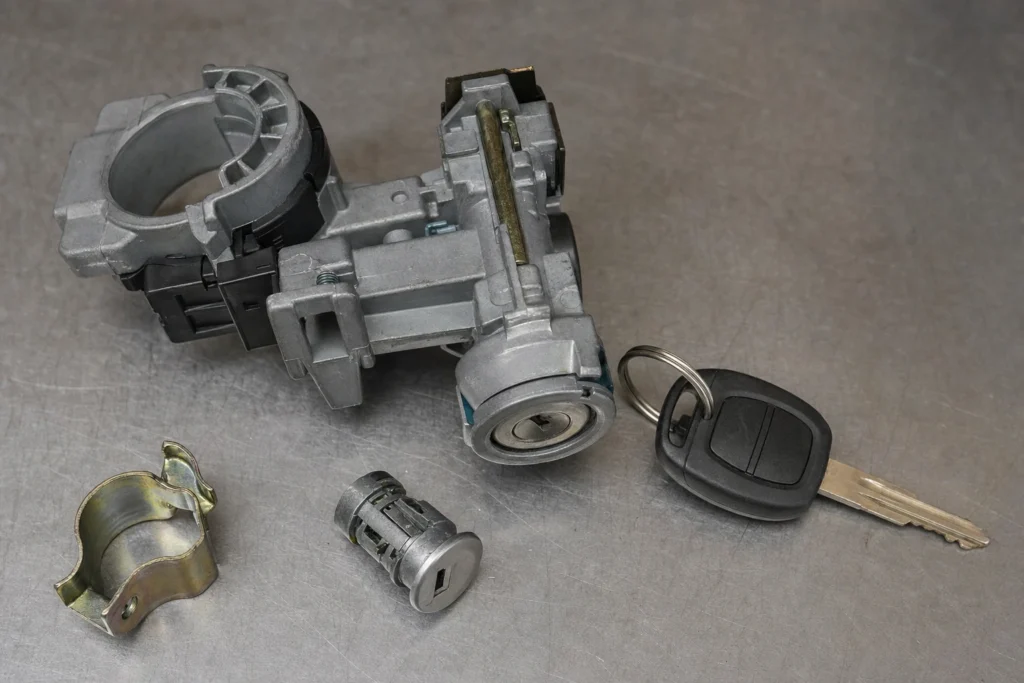
A start button that blinks, a steering wheel that will not budge, or a key that turns without waking the dash all point to the same truth in 2026: ignition problems now live at the intersection of worn metal and picky electronics. Forcing the key or hammering the start button usually multiplies the damage. Use the guide below to zero in on the cause, try a few safe checks, and decide when to call for professional help.
Why Ignitions Fail in 2026: Hardware Meets Software
Mechanical wear has not gone away. Traditional lock cylinders still rely on tiny wafers that line up to the exact heights your key blade dictates. A key worn by a fraction of a millimeter can leave those wafers misaligned, so the cylinder binds, the wheel locks, and the key will not rotate smoothly. Heat can make a borderline cylinder seize, then behave again once it cools, which explains the maddening “it only acts up in the afternoon” pattern.
Electronics now play an equal role. Push-to-start systems must verify a valid key, confirm the brake is applied, check the shifter position, and unlock the steering column before they will crank. Any weak link, from a dying fob battery to an electronic steering column lock fault, stops the sequence. Low vehicle voltage is another frequent culprit in 2026. Start-stop systems and short-trip driving can leave the battery undercharged, which starves ignition modules of the steady power they need to complete their handshake.
Symptoms That Narrow the Cause
Clues on the dash matter. A flashing security light often signals an immobilizer mismatch, which will not be fixed by a new starter or more force on the key. No dash lights at all with a key that turns can point to a failed ignition switch or a broken connection between the cylinder and the switch. A rock-hard steering wheel that softens when you nudge it left or right tends to be simple lock tension, but a wheel that stays locked while the key refuses to move suggests the column lock or the cylinder itself is jammed.
Push-to-start vehicles add a few telltales. “Key Not Detected” messages often trace back to a weak fob battery or interference, but if holding the fob to the start button does nothing and the security light flashes, the car and key may not be communicating. If the dash wakes up normally and you hear a click but no crank, the shifter position sensor or brake switch could be the hold-up.
A Two-Minute Check Before You Call
These checks are safe, quick, and can save you an unnecessary tow. If any step feels forced, stop.
- Try a spare key. A worn primary key that fails while the spare works points to cylinder or key wear, not a battery or starter issue.
- Relieve wheel tension. Gently turn the wheel left or right while turning the key. If it frees up, the lock pin was loaded, not broken.
- For push-to-start, press the fob to the start button. Then press the brake firmly and try again. This bypasses weak fob battery range.
- Confirm Park or try Neutral. A stubborn shift interlock can prevent cranking even though the dash wakes up.
- Watch the security indicator. A flashing or solid security light means stop forcing the key. The immobilizer is blocking the start.
- Check interior light brightness. Very dim lights hint at low system voltage, which can confuse ignition modules.
If these do not change the behavior, further testing is needed.
How Pros Diagnose Without Guesswork in 2026
A technician should verify the symptom first, then separate mechanical from electrical causes. For keyed ignitions, that often includes inspecting the key for wear, checking the cylinder for binding, and confirming the ignition switch passes power correctly through each position. For push-to-start systems, scan-tool data is invaluable. Reading immobilizer and steering lock codes, monitoring brake switch and shifter inputs, and confirming key authentication status prevent unnecessary part swaps.
On vehicles with failing cylinders, rekeying or replacing the cylinder is common. A contractor should explain whether your existing key can be matched to the new cylinder to keep one key for doors and ignition. For electronic faults, the fix might be programming a new key, reinitializing a steering lock, or addressing a power or ground issue. The right approach avoids stacking costs on guesses.
If you want to see what we handle day to day, our Auto Locksmith page covers common vehicle-related services, and you can review the broader lineup on Services.
Choosing Professional Ignition Repair Services
The market for Ignition Repair services is crowded in 2026, but a few questions help you find the right fit. Ask if the provider performs a scan-based diagnosis for push-to-start and immobilizer issues before replacing parts. For keyed systems, ask how they address worn keys and cylinders together, since replacing only one often leaves the problem half-solved. Verify they can cut to code and, when applicable, program keys for your vehicle, and check that they will attempt to preserve a single key for doors and ignition if possible. Where licensing or registration applies in your area, verify it, along with insurance.
If fast, professional help is your priority, Lion Guard Locksmith offers automotive locksmith services and can guide you to an efficient next step through Auto Locksmith.
When To Stop Troubleshooting
Call a professional if a key is partially stuck, the security light stays on, the steering wheel will not unlock after gentle wheel relief, you smell burning near the column, or the vehicle intermittently dies while driving. These are not DIY-safe problems and often get worse with force.
Ignitions in 2026 are half metal, half code. A few careful checks can save you time, but the fix is about correct diagnosis, not luck. If you need prompt assistance, send a note through Contact Us and describe the exact symptoms you see.