
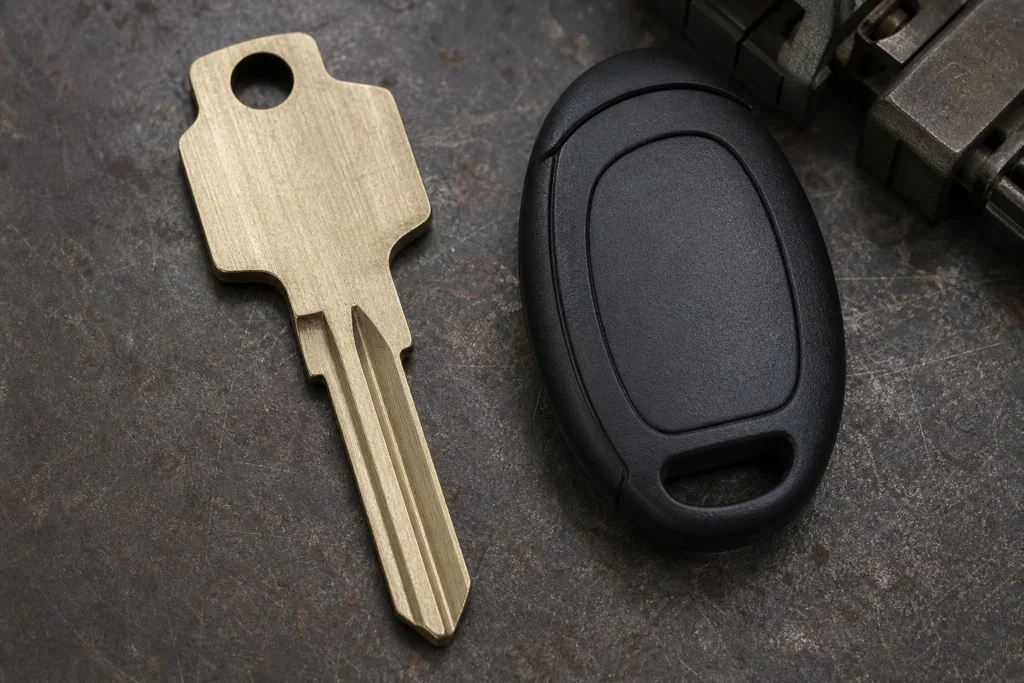
A key that will not start the car is rarely “just a key.” In 2026, most vehicles pair keys or fobs to immobilizers and body control modules. That is why the fastest path back on the road starts with knowing what you have and what a professional will actually do. Use this detailed guide to car key replacement services to prepare, choose the right help, and avoid repeat downtime.
Why Key Type Matters to Car Key Replacement
The replacement path depends on the key system in your vehicle. A plain metal blade usually needs only an accurate cut. A transponder key has a small chip that must be programmed to your immobilizer. A remote‑head key combines a chip and buttons in the head. A proximity or push‑to‑start fob talks to antennas in the cabin and often requires more steps, including adding the fob’s ID to the vehicle’s approved list.
You do not have to know every technical detail. A quick self‑check helps narrow things down: do you insert a key and turn, or press a start button while the fob stays in your pocket? Does your current key have buttons on it, or are the buttons on a separate fob? Sharing those answers on the first call saves time and can change which tools and blanks a technician brings.
Ownership verification matters too. Have a photo ID and one of these ready if you can: registration, title, or insurance card. Many modern replacements require access to security data, and those systems demand proof that the car is yours before programming can begin.
What a Professional Car Key Replacement Involves
A mobile automotive locksmith aims to finish the work where the car sits. That usually means decoding your key information, cutting the blade if one exists, and pairing a new chip or fob to your vehicle’s electronics. The order is important because programming steps can differ when no working key is present.
Here is the typical sequence once you have confirmed ownership and vehicle details:
- Verify and decode: Confirm ownership, read the VIN, and retrieve or decode the key specs.
- Select the correct blank: Choose an OEM or quality aftermarket blank or fob that matches the vehicle.
- Cut the blade: Laser or edge cut to factory spec, or impression the lock when data is unavailable.
- Program the transponder or fob: Pair the chip to the immobilizer and add remote lock functions.
- Test everything: Start the engine, lock and unlock, open the trunk, and check proximity range if push‑to‑start.
- Secure the profile: When supported, remove lost keys from the authorized list so missing copies no longer start the car.
If you still have one working key, programming a spare is usually faster. Some vehicles require two recognized keys to add a third without extra authentication. If you have lost all keys, expect additional security checks and sometimes longer programming sessions.
Locksmith or Dealer: How to Choose Fast
Dealers are a strong option for rare vehicles or when modules need firmware updates. A mobile pro is often the quicker, lower‑disruption choice because the service comes to you, there is no tow, and many models can be cut and paired the same visit. The deciding factors are parts availability, required security credentials, and whether the vehicle supports on‑site programming.
A good first step is a quick call with clear facts: year, make, model, push‑to‑start or turn key, and whether you have any working keys. If your situation fits, you can start through our auto locksmith services. If a dealership visit is truly required, a reputable locksmith will tell you that up front so you do not waste time.
Timing, Security, and Cost Factors in 2026
Three things drive time and price. First, the key system itself. Blade-only is quickest, transponder adds programming, and proximity fobs add both programming and range checks. Second, the starting point. All-keys-lost scenarios often require extra authentication or immobilizer resets compared to adding a spare. Third, data access. Some models need approved security tokens or wait periods to retrieve codes.
Security is part of the work. On many vehicles, a technician can remove missing keys from the authorized list so a lost fob will not start the car. Ask about this step if you lost keys in a public place. It is as important as cutting and programming the replacement.
A Hypothetical All-Keys-Lost Morning
You reach the parking lot and realize your push‑to‑start fob is gone. In a typical all-keys-lost case, the tech confirms ownership, identifies the correct fob, and syncs it to the immobilizer through an approved process. If the model supports it, the lost fob’s ID is deleted so it no longer starts the vehicle. Final checks include starting the engine, verifying lock and trunk functions, and confirming the fob works in common spots like your pocket and bag. The car never leaves the lot, and you head to work with a plan to add a spare later.
Keep the Next Replacement Easy
Store a photo of your registration and VIN in a secure app. If the vehicle came with a plastic key code tag, keep it somewhere other than the glove box. Replace a weak fob battery before it strands you, especially if your start button has been intermittent. Most importantly, do not wait until you are down to a single key. Adding a spare while one working key exists is usually faster and avoids extra verification steps.
If you need help now, start by visiting our Contact Us page or review available options on Services. Our team is ready to talk through your vehicle and point you to the next right step.