
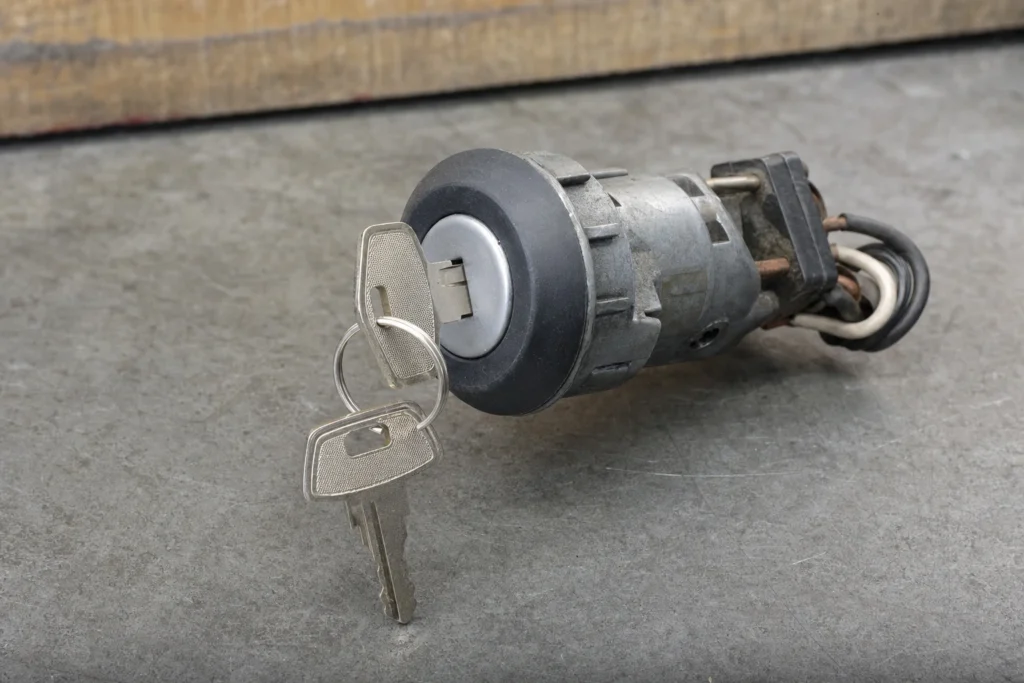
A key that turns without waking the dash, a start button that blinks, or a wheel that will not budge all point to one core problem: the ignition circuit did not get the inputs it needs. The fastest way to stop guessing is to gather proof. Read the clues your car is already giving you, run a few safe checks, and you can tell whether the issue is mechanical, electrical, or related to security programming.
How the Ignition Actually Works Now
Older vehicles relied on a metal key turning a lock cylinder that moved an electrical contact block. Many cars still use that layout, but most also add an immobilizer that asks your key or fob to identify itself before allowing a crank signal. Push-to-start systems move the switch and the “is this key allowed?” question into software, but the ingredients are the same: physical input, electrical switching, and security approval.
That means a no-start can come from worn wafers in a cylinder, a cracked or worn key blade, a failing contact block, a dead fob battery, a broken immobilizer antenna ring around the cylinder, or missing signals from the brake pedal or shifter. Your job is to narrow it from “could be anything” to a short list you can act on.
Common Symptoms and What They Prove
If the key will not turn and the steering wheel feels jammed, the wheel is likely loading the lock pin. Turning the wheel gently left and right while easing the key often frees it. If a spare key works smoothly while the worn daily key binds, that is proof of a blade or cylinder wear issue, not an electrical fault.
If the key turns but the dash stays dark, the problem is almost always electrical. Either the battery voltage is too low to power the cluster and switch, or the contact block behind the cylinder is not passing power to accessories and ignition circuits. By contrast, if the dash lights up normally but the security icon flashes or stays solid, the immobilizer handshake failed. That points to a transponder key that is not being read, a weak fob battery, or a failed antenna ring at the column.
Safe Checks You Can Do Before Calling for Help
You do not need special tools to gather meaningful evidence. The goal is to avoid damage while ruling simple things in or out. Do not force a stubborn key, and do not hammer a start button. Light inputs and careful observation tell you more than force ever will.
Use this quick, proof-focused sequence:
- Try a second key or fob: If the spare starts the car, the primary key is worn or its transponder is not registering. That is strong evidence against a deeper electrical fault.
- Relieve steering wheel tension: Turn the wheel slightly left and right while easing the key. If the cylinder frees up, the issue was mechanical bind, not a failed switch.
- Check brake and shifter signals: Confirm the brake lights work and move the shifter to Neutral for a start attempt. No change with working brake lights points away from the brake switch and toward the ignition circuit or security.
- Watch the security light: A flashing or solid immobilizer icon with normal dash power proves a key recognition problem. Hold the fob against the start button or near the column ring and retry. If it starts, the fob battery is the likely culprit.
- Note accessory power: If radio and cluster stay dark in ACC or ON, suspect the ignition switch/contact block or a power supply issue rather than the starter or immobilizer.
Each step narrows your options with observable results. Write down what you see so a professional can pick up where you left off without repeating work.
What a Professional Checks and Fixes
A qualified automotive locksmith or technician will combine your observations with tests: switch continuity checks, voltage drop measurements at the column, scan tool data for brake and park/neutral inputs, and immobilizer status. On keyed systems, a worn cylinder can be decoded and rebuilt to match your existing keys, or a failed contact block can be replaced. On transponder and push-to-start systems, the antenna ring, fob battery, or key programming may need attention after electrical faults are ruled out.
If you prefer help from a team that handles vehicle entry, keys, and ignition issues every day, review our Auto Locksmith offering. For a broader look at everything we handle across homes, businesses, and vehicles, see our Services page.
Preventive Habits That Extend Ignition Life
Keep weight off your key ring. Heavy bundles tug on a keyed cylinder while you drive and wear the wafers. Replace worn keys early rather than copying a worn blade; every duplicate of a bad edge gets worse. If a cylinder feels gritty, avoid oily sprays that attract dust. A very light application of dry graphite can help traditional lock cylinders, but always follow your vehicle manual’s guidance.
For push-to-start systems, replace the fob battery proactively, especially if range has shortened. Keep a labeled spare key or fob in a safe place. Both steps reduce accidental immobilizer lockouts that mimic deeper ignition failures.
Next Steps for Your Vehicle
If your quick checks pointed to a likely cause and you want a clear path forward, reach out through Contact Us to share your observations. The more proof you bring to the first conversation, the faster a correct fix can happen.