
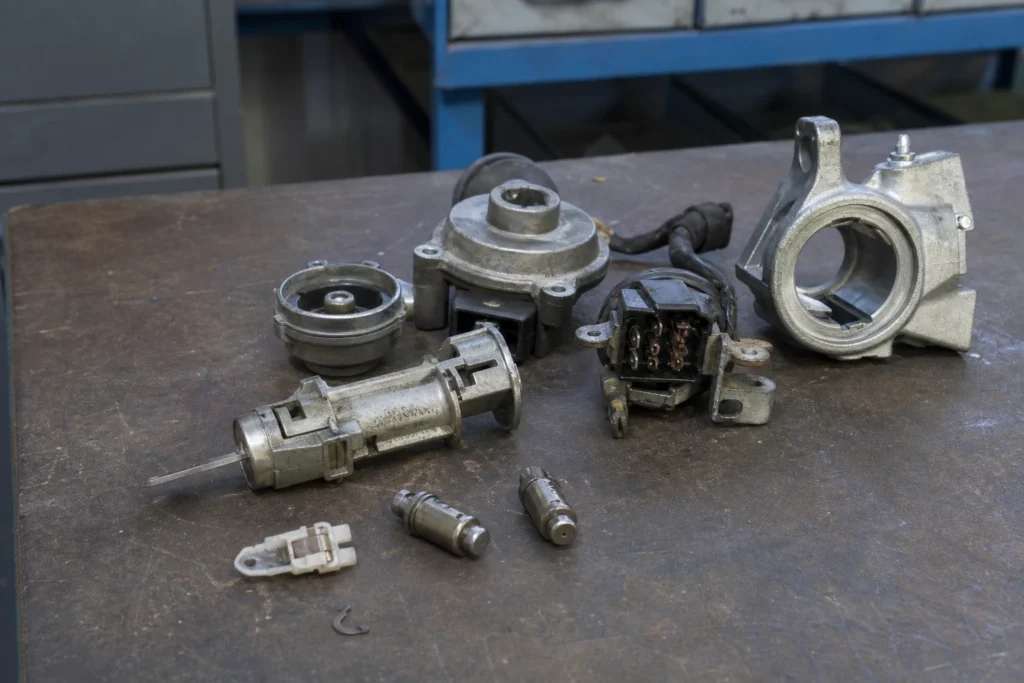
Silence at the start button or a key that turns without waking the dash is not random. Your car is already handing you proof. Read those clues correctly, avoid the common missteps, and you either fix the issue fast or know exactly what to tell a technician. This guide focuses on practical evidence you can gather in minutes, plus professional ignition repair tips and pitfalls to avoid in 2026.
Read the Evidence Before You Touch Anything
Start with the dash and warning lights. If the cluster stays black but interior lights are bright, the problem likely sits in the ignition input chain, not the battery. If the dash wakes up but the starter stays quiet, you may be looking at a brake switch or shifter interlock not sending the “ok to start” signal. A blinking key icon or “no key detected” message points to transponder or fob recognition, not a worn cylinder.
Next, feel the steering wheel. A wheel locked at full turn can bind the key. Gentle counter pressure on the wheel while turning the key often releases it. If the key spins freely with no detents or spring-back, the mechanical connection to the electrical switch may be compromised. If the key will not turn at all, suspect a worn blade or misaligned wafers inside the cylinder.
For push-to-start cars, listen. Do you hear a relay click, fuel pump prime, or nothing at all? No sound plus no brake-pedal acknowledgment on the dash suggests the vehicle never got “foot on brake” or “valid key” inputs. One short chirp followed by silence can mean the immobilizer shut it down.
A Short, Safe Proof Sequence You Can Do
- Check for “Brake” or “Shift to Park” messages. Confirm the shifter is fully in Park and press the brake firmly. If messages change when you do this, you just proved those inputs are being seen.
- Try a second key or fob. If the spare works, the original may have a weak transponder or damaged blade. That is clean proof without opening anything.
- Turn the steering wheel slightly while turning the key. If it frees up, you had a column lock bind, not a failed cylinder.
- Observe dash brightness during a start attempt. If lights dim hard or reset, battery or cable issues are likely. If brightness stays solid and nothing else happens, focus on ignition switch, interlock, or immobilizer.
Each step isolates a variable. You are not “trying everything.” You are gathering evidence you can repeat and describe, which prevents unnecessary parts from being thrown at the problem.
Pro Tips That Save Ignitions
Use the right lubricant sparingly. A dry graphite or a plastic-safe lock lubricant is usually safer than a heavy spray that attracts dust and gums up wafers. If a previous owner flooded the cylinder with oil, a professional cleaning can often restore smooth key travel without replacing the entire assembly.
Keep weight off your key ring. A heavy bundle tugs on the cylinder every mile you drive. Over time, that wear shows up as intermittent contact in the electrical switch or a key that must be “held just right” to start. Lighten the load and you extend the life of both the cylinder and switch.
Respect immobilizer timeouts. After multiple failed start attempts, many vehicles need a few minutes undisturbed before they will accept a valid key again. Rushing resets by disconnecting the battery can erase radio presets and sometimes complicate anti-theft relearns. Patience is a tool here.
If you use a silicone key cover, make sure it is not blocking the fob’s emergency key slot or the proximity sensors in the car. Removing the cover for a quick test is a simple way to rule this out.
Common Pitfalls That Make Repairs Worse
Do not force a stuck key. Twisting harder can snap the blade, shear the cylinder tailpiece, or jam wafers beyond a simple fix. Once metal breaks, the repair often escalates from a clean rekey to a full replacement and steering column disassembly.
Avoid drilling or “universal” switch hacks. Modern columns integrate airbags, steering locks, and sensors. Drilling risks collateral damage and can disable safety systems. A tidy-looking bypass today can become a no-start or airbag light tomorrow.
Be careful with unprogrammed spares. A cut metal blade without a programmed transponder may turn the cylinder but will not satisfy the immobilizer. Repeated attempts can trigger lockout timers and confuse the diagnosis. If a metal key turns but the dash shows “key not recognized,” programming is part of the fix.
Do not chase every fuse at once. Pulling and reinserting fuses indiscriminately can create new faults. If you check fuses, test them with the ignition off, one circuit at a time, and note positions before removal.
When to Call a Pro and What to Ask
If your key spins freely with no electrical response, if a push-to-start system will not acknowledge the brake or a valid fob, or if you suspect a steering lock or immobilizer fault, it is time for specialized tools and programming. An automotive locksmith can cut a precise key to factory spec, service the cylinder, and handle transponder or proximity programming on site in many cases.
For car-specific help, review our Auto Locksmith service details and what we handle across keys, fobs, and ignitions. If you want a broader view of our capabilities beyond the car, you can also explore all Services. Prefer to talk through symptoms first? Reach out through Contact Us and share the evidence you gathered from the steps above.
The practical takeaway is simple: proof beats guesses. A few careful checks separate battery, key, cylinder, and immobilizer issues so you either solve it or get the right Ignition Repair services without paying for the wrong parts. The practical takeaway is simple: proof beats guesses. A few careful checks separate battery, key, cylinder, and immobilizer issues so you either solve it or get the right Ignition Repair services without paying for the wrong parts.