
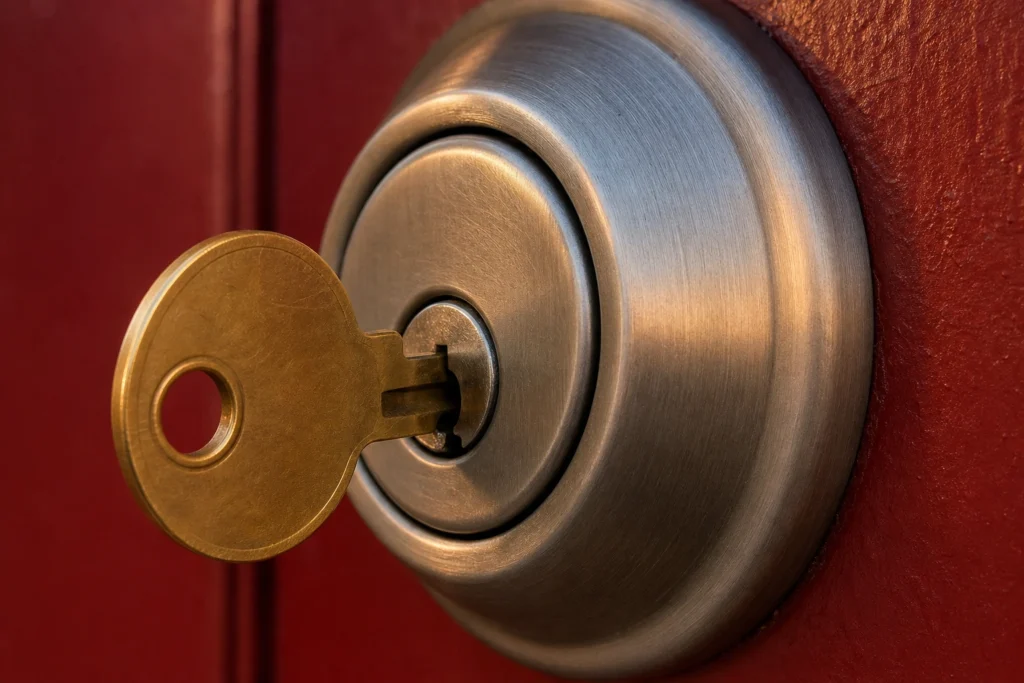
Lion Guard Locksmith provides reliable help for home lockouts, car lockouts, and commercial security needs. To protect your time and budget, especially during busy moving and travel seasons, a clear project scope should state exactly what will be done, how access will be handled, and what you’ll receive when the work is complete.
What follows is a practical way to read any locksmith estimate or work order so you can approve it with confidence. If you’re comparing providers, use these points as your clear project scope locksmith services guide.
The essentials any scope should name up front
The problem defined in plain language. “front deadbolt seized,” “lost all car keys,” or “add restricted keys for back office.”. The intended method. Least-destructive entry first for lockouts, rekey vs. replace for door hardware, repair vs. replace for ignitions.
Hardware specifics if applicable. Brand/model (if known), finish, door material (wood, metal, glass storefront), and backset/handing if locks are being installed. Access and authorization. How you’ll verify occupancy or ownership and who can approve changes if site conditions differ from the estimate.
Deliverables. Number of keys/fobs/cards to be issued, any programming steps, and a brief note about post-service support expectations. Timing. The target arrival window (for emergencies) or start/finish windows (for planned work). If something must be done before a holiday weekend or move-in date, make that explicit in writing.
Emergency and house lockouts: clarity under pressure
In urgent moments, clarity beats speed-dials. A solid scope for a home lockout should confirm:
- Door and lock type (single-cylinder deadbolt, mortise case, smart lock) and any secondary barriers like storm or security screens.
- A least-destructive-first approach, with drilling only if non-destructive methods fail or the lock is irreparably damaged.
- How you’ll confirm right-to-enter and where the technician will meet you (useful during travel or realtor-assisted access).
- Immediate follow-up options if the lock is damaged or compromised, such as rekeying that same visit.
If you’re planning ahead or comparing options, see how your needs map to our residential offerings on our residential locksmith services page.
Car lockouts and automotive work: details that save hours
Automotive scopes live or die on specifics. Insist that the scope identifies: Vehicle make, model, and year, plus whether the issue is lockout, broken key, no-start, or key lost/stolen. Key technology involved (basic metal key, transponder, remote head, proximity/fob) if known; this changes both tools and programming steps.
Proof-of-ownership requirements and where the service will occur (curbside, parking garage, dealership lot rules). For car key replacement, the number of working keys requested and whether any lost/stolen keys should be deleted from the vehicle memory.
For ignition repair, symptoms noted (key won’t turn, intermittent start, stuck cylinder) and whether the plan is repair, re-pin, or replace.
If you’re exploring options, our auto locksmith services page outlines the kinds of automotive problems locksmiths address.
Rekey vs. replace: what your scope should decide Whether you’ve just moved or you’re resetting access after staff changes, your scope should make a clear call: Rekey when hardware is sound but keys are uncontrolled. The scope should list the number of cylinders, doors affected, and the keying plan (one-key convenience vs. separate keys). Replace when hardware is failing, outdated, or you’re upgrading strength or features. The scope should specify grade/format (deadbolt, mortise, rim), finish, and any required compatibility (e.g., existing keyways or future master keying).
If you’re adding smart locks, the scope should outline power (battery/wired), connectivity (Bluetooth, Wi‑Fi, Z‑Wave), user management needs, and any platform integrations you plan to use.
Commercial security: reduce ambiguity, raise accountability
For offices, retail, and light industrial spaces, a commercial scope should: Name the controlled doors, zones, and user groups, plus any time-based access needs. Identify whether you need a master key system, restricted keyways, or audit-capable devices.
Flag compliance considerations you or your property manager will review (life safety egress, door closers, panic hardware, or accessibility). Define deliverables. Number and type of credentials to issue, labeling scheme for cylinders/doors, and documentation you expect at handoff.
To see how these elements translate to real-world work, explore our commercial locksmith services.
Seasonal moments to plan around
Moving season. Build rekeying and mailbox/garage updates into your closing or lease timeline; list every door you actually use, not just the front entry. Summer travel. If you’ll host sitters or contractors, include temporary codes or limited-issue keys in your scope so there’s no scramble the day you leave.
Year-end turnover. Align staff offboarding with a scheduled rekey or credential audit; your scope should name who approves revocations and when.
A note on choosing a provider
Whatever your project size, a provider should be comfortable putting the above in writing and answering what-ifs before tools are out. Lion Guard Locksmith serves residential, commercial, and automotive needs, and our commitment to quality service and rapid response times reflects how seriously we take your security and schedule. If you want to get oriented before you call, browse our residential locksmith services, commercial locksmith services, and auto locksmith services to align your scope with the right service track.