
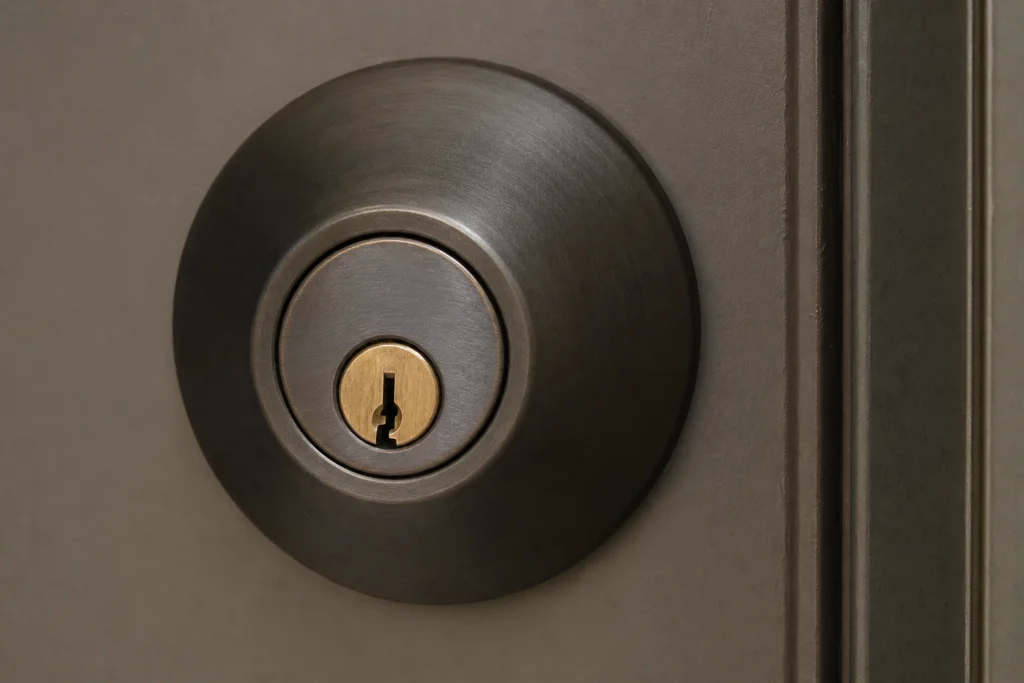
Before approving locksmith work, ensure the proposed solution aligns with your specific security needs. Before you green-light any locksmith job, insist that the recommended fix fits your exact security need. That simple rule keeps the plan centered on your priorities, not on anyone’s favorite gadget.
If you’ve ever felt rushed while comparing locksmith services, you’re not alone. It’s easy to say yes to the first “We can be there fast” only to realize later you bought more (or less) than you needed. The way through the noise is to anchor every proposal, emergency lockouts, rekeys, smart locks, business upgrades, car keys, even ignition issues, to the specific problem you’re solving and the risk you want to reduce.
Start with your goal, not the hardware
Before you ask for prices or brands, state the outcome you need in one sentence.
- Home: “I’m locked out and want back in without damaging the door,” or “I need one key to work every exterior door,” or “I want a keypad so my dog-walker has access without carrying a key.”
- Business: “We need to control who can enter after hours and track access,” or “We’re rekeying after staff changes without replacing hardware.”
- Vehicle: “I’m locked out and need non-destructive entry,” or “I lost my only key and need a new one programmed,” or “The key turns but the car won’t start, check the ignition.”
That focus lets a professional tailor the approach rather than defaulting to the most familiar tool or the most expensive upgrade.
Questions that keep proposals honest
Use these prompts to align recommendations with your need, timeline, and budget.
Scope the problem. What exactly are you solving first, and what can wait?
What will success look like 24 hours after the visit? In 30 days? Options and trade‑offs.
What are two viable approaches for my situation, and why would I pick one over the other? If I choose the lower‑cost path today, what limitations or future costs should I expect?
Entry and impact (for lockouts). What’s your planned entry method, and what’s the risk of damage to the lock, door, or frame?
If drilling becomes necessary, what is the replacement plan for the cylinder or hardware? Rekey vs. replace.
Can we rekey the existing locks to a single key, or do any units require replacement due to condition or type? If we replace, how will the new hardware match my door’s prep and finish?
Smart lock decisions. How will this smart lock handle battery failure or power loss?
What’s the backup access method, and who should have it? How are PINs, fobs, or app permissions added and removed?
Commercial considerations. Which doors require code‑compliant egress, and how does this solution maintain that?
What audit or reporting features are available, and who will manage credentials? Vehicle specifics.
For my make, model, and year, what are my key options (standard, transponder, remote, fob)? What proof of ownership do you need before cutting or programming a key?
If the issue is the ignition, what diagnostics will you run before recommending repair or replacement? Aftercare and clarity.
What are the part numbers or models you’re proposing, and why those? How many working keys will I leave with today, and how is key control handled?
You don’t need every answer in every scenario. You do need enough clarity to see how each step maps to your goal.
Scenario‑by‑scenario guardrails
Emergency home lockout. Ask for the least‑destructive entry method first and the conditions that might require drilling. Confirm the plan for restoring security if the lock must be replaced. Rekeying a home. Confirm which locks can be keyed alike and what to do with misfits (e.g., different brands or worn cylinders). Decide who gets which keys.
Installing a smart lock. Clarify backup access, battery maintenance, and how you’ll add or remove users without handing out physical keys. Upgrading a business. Tie hardware choices to real risks, traffic levels, door construction, compliance, audit needs, not just brand names.
Car key replacement. Verify key type and programming steps specific to your vehicle. Confirm you’ll leave with a tested, starting vehicle and a spare plan if something fails. Ignition problems. Ask for diagnostics first. Replacement should follow a clear finding (worn cylinder, chipped wafer, electronic issue), not guesswork.
How Lion Guard approaches this conversation
Lion Guard Locksmith provides top‑notch locksmith services for residential and commercial clients and is dedicated to keeping you safe and secure across home, business, and automotive needs. Their focus on customer satisfaction, a wide range of tailored solutions, and a commitment to quality service with rapid response times means the discussion starts with your goal and builds outward from there, not the other way.
For homeowners. Explore our Residential Locksmith services to see options that fit everyday life, from lockouts and rekeys to smart upgrades. For businesses. Learn how thoughtful door hardware and access changes can protect operations through our Commercial Locksmith solutions: Commercial Locksmith.
For drivers. If you’re comparing non‑destructive entry, car keys, or ignition help, review our Auto Locksmith services to understand what’s possible for your vehicle: Auto Locksmith.
One last filter before you approve the work: ask the provider to restate your goal, list the steps they’ll take, and name one alternative with a different trade‑off. If that recap makes sense to you, you’ve kept the decision anchored to your security, where it belongs. One last filter before you approve the work: ask the provider to restate your goal, list the steps they’ll take, and name one alternative with a different trade‑off. If that recap makes sense to you, you’ve kept the decision anchored to your security, where it belongs.