
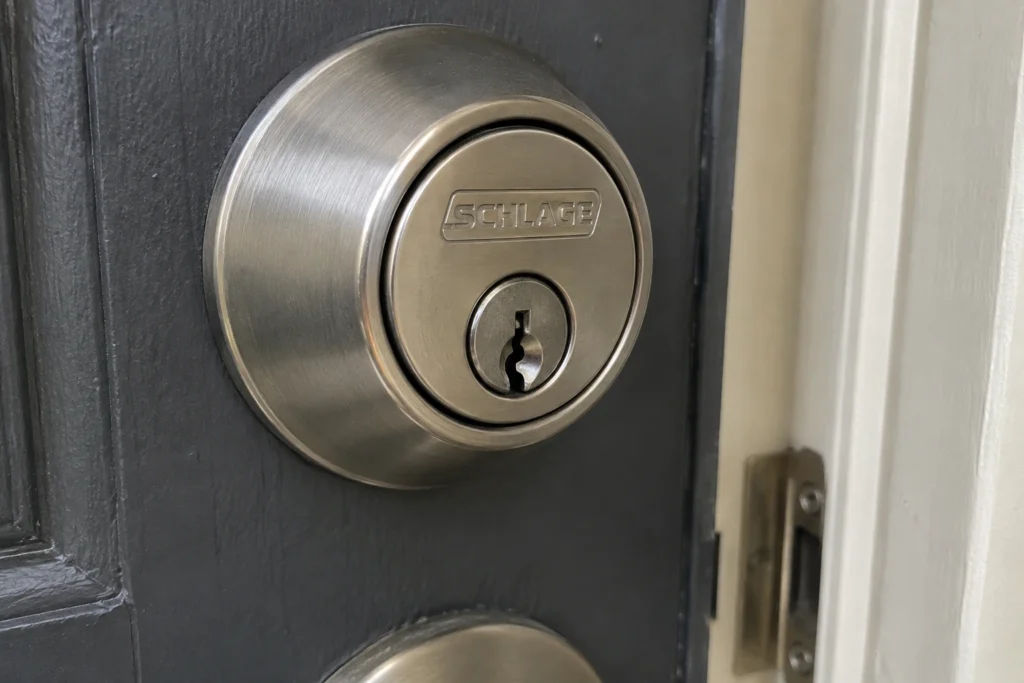
In Georgia, a landlord cannot change locks during an active tenancy without a court order. If you are a renter planning a lock change, your lease and Georgia tenant lock change laws shape what you can do and how you should notify management. The safest path is to follow your lease, give prompt written notice, and if you rekey in an emergency, provide the landlord with a working key or access method as required. For legal background and context, see our Georgia law resources at the Georgia law tag.
Safe, fast paths that keep you within Georgia rules
Start with your lease. Many leases allow a tenant-initiated rekey or hardware swap if you notify the landlord and promptly supply a key. If your lease requires written permission first, send a dated request that states your reason, which doors are affected, and when you propose to do the work. If safety requires immediate action, arrange a rekey and deliver the new key or access method right away, unless your lease or a court order says otherwise.
Document everything. Save your email or portal message, a timestamped photo of the old cylinder and new key set, and the locksmith invoice. These basics show that you acted to secure the unit without wrongfully excluding anyone and that you complied with your lease conditions on access.
Rekey or replace on a residential door
Rekeying changes the internal pins of the existing lock so old copies stop working. It is typically faster than a full hardware swap and keeps the look and fit of the door the same. Replacement installs new hardware and is the right choice when the current lock is damaged, poorly fitted, or you are upgrading security features. If your front door has a keypad or smart lever, do not forget the physical cylinder that still controls the deadbolt or latch.
When you speak with a locksmith, be specific about the number of keyholes per door, whether you want all exterior doors keyed alike, and any HOA or building rules on finishes. If you are weighing options, our guide to Rekey Services: Costs, Timelines, and Choices explains how scope and timing affect the quote.
Who pays, and what proof you should keep
Costs are usually handled by your lease or a written agreement with the landlord. Some landlords cover rekeys between tenancies but expect tenants to pay for mid-lease changes that a tenant requests. If the work relates to damage or security concerns you already reported, confirm in writing whether the landlord will authorize and pay for the fix.
Keep a clean paper trail. Hold onto the locksmith’s detailed invoice, before-and-after photos of each door, the delivery receipt for the landlord’s key, and all messages or portal notes. If a dispute arises, this file shows that you acted reasonably, within your lease, and with proper notice.
The critical questions to ask before you approve locksmith work
Before you say yes to any quote, clarity protects both your budget and your lease compliance. Use the questions below to get a complete, written scope. For why this matters, see The Concrete Price Is Only Useful When the Scope Is Clear and our perspective in A Better Question to Ask Before You Approve the Work.
- What is your exact plan: non-destructive entry, rekey, or full replacement on each door?
- Which parts are included by brand and finish, and are they compatible with my door prep?
- Will all exterior locks be keyed alike, and how many working keys are included at handoff?
- How will you handle smart locks or keypads so both codes and cylinders are secure?
- What is the not-to-exceed price, and how are change orders approved if conditions differ on-site?
- What does the timeline look like today, and what arrival window can you commit to?
- How will you document the work for my landlord: photos, key counts, and an itemized invoice?
- What should I know about key control or restricted key options to prevent unauthorized copies?
- If a lock is too worn to rekey, what is the fallback plan and cost delta I should expect?
- Will your work maintain safe egress and meet building rules for occupied dwellings?
Landlord notice that stands up later
A good notice is short, factual, and gives your landlord a clear decision to make. Include the doors you want secured, the reason in neutral terms, and the date you propose for the work. If you already rekeyed for safety, state that you will deliver or have delivered a working key and attach the invoice. Ask the landlord to confirm receipt and note any building requirements you must follow for future maintenance.
Send notice through a channel that creates proof: your tenant portal, email with read receipt, or certified mail if your lease requires it. Keep a single running message thread so the timeline is easy to follow. If you do not receive a response within the timeframe your lease contemplates for maintenance requests, follow up once in writing and then proceed cautiously in line with your lease. For background on how Georgia treats lockouts and access, review the Georgia law context at our Georgia law tag.
A local, seasonal note for 2026 move-ins
Spring and summer leasing in Georgia move quickly, and keys often pass through agents, cleaners, and contractors. A same-day rekey as you take possession gives you a clean reset so only your approved keys work. If you are in or near Alpharetta and planning a change this season, decide early whether you want one-key convenience across all exterior doors and clarify it in the scope and price before the visit.
For related details, review restricted keys and Georgia law.
A careful, lawful lock change has two parts: follow your lease and prove your steps; then insist on a precise scope so the work matches your needs. If you start with the questions above and keep your documentation tidy, you will secure your door without creating new problems. For deeper planning and quote expectations, see Rekey Services: Costs, Timelines, and Choices.