
The fastest path to a firm quote and a first-trip fix
A short, focused set of photos plus a few clear details sent before dispatch is the fastest way to get a firm quote, avoid surprises, and ensure the technician shows up with the right parts. Think in three pieces: proof of ownership or right of access so service can proceed, lock or key system details so the method and parts are correct, and access information so arrival and entry go smoothly. With those three covered, we can price precisely, load the correct inventory, and resolve your issue on the first trip.
If you are not sure exactly what to photograph, use the checklist below and then skim the scenario notes that follow for home, business, vehicle, and urgent situations. Each scenario calls for the same core set, with a few add-ons that quickly answer the shop’s make-model-keyway questions and any permission or authorization requirements. The goal is a one-minute send that removes guesswork and prevents callbacks before anyone rolls. That camera-first approach keeps the scope defined, shortens approval cycles, and helps us sequence work for a clean, first-trip resolution.
Your one-minute photo and details set
To speed quoting and ensure the right parts are on the truck, aim for clear, well-lit photos and a concise note that describes what you need done. Avoid sending images that reveal full bitting or blade cuts on any working key, and never post those images in a public channel. If a blade photo is necessary due to a broken or stuck key, mask some cuts in transit or use a secure portal we provide. For doors and safes, include both the hardware close-ups and the surrounding frame so we can confirm dimensions and hand the door properly. For vehicles, include identifiers like the VIN and fob or remote markings so we can match transponders or remotes to your platform without guesswork.
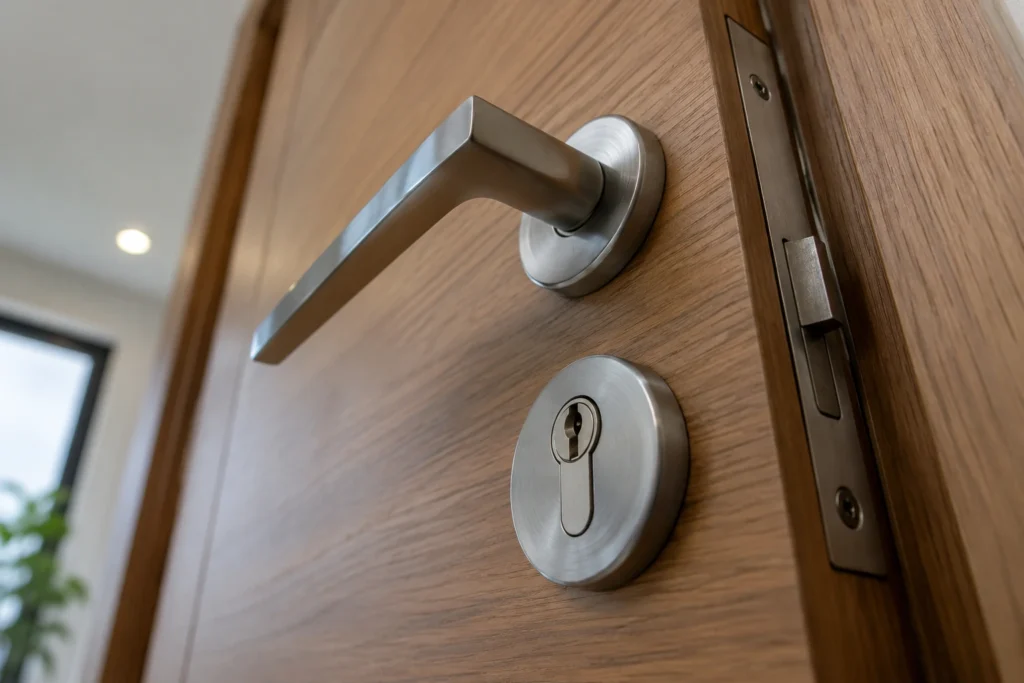
- (Must-have) Close, well-lit photos of the problem area. Show the keyway or cylinder face and the handle, deadbolt, latch edge, ignition, or fob. Take one straight on and one at a slight angle.
- (Must-have) A wider context shot. Include the full door and frame with hinges, strike plate, and threshold, or the vehicle door, dash, and ignition or start button area.
- (Must-have) Labels and stamps that identify parts. Photograph the latch edge and interior escutcheon for brand or model, the storefront hardware head if commercial, the car VIN plate on the dash or door jamb, and the fob or remote showing the FCC ID and part number.
- (Must-have) The key or fob head only. Capture the brand and any stamps like A, DND, Primus, or Do Not Duplicate. Avoid sending clear blade or bitting images of working keys. If a blade photo is necessary for a broken or stuck key, mask some cuts in transit or use a secure portal we provide.
- (Must-have) What you need done and how many. For example: unlock, rekey to an existing key, change or upgrade hardware, make or program a key or fob, safe work, or mailbox work. Note any authorization differences, such as who approves a rekey versus a hardware change, whether a master system change needs written permission, or if a vehicle service will be performed with the registered owner on site.
- (Must-have) Full service address with unit, parking and entry instructions, and where to meet. Include gates, codes, elevators, concierge, loading dock, and any low-clearance garages.
- (Must-have) Best call or text number, on-site contact name, and timing window. Tell us if this is an emergency right now.
- (Must-have) Your proof plan. State what ID or documents you will show on arrival or who will meet the technician with authorization.
- (Nice-to-have for doors) Handing and measurements. Note left or right, inswing or outswing, backset measurement such as 2-3/8 or 2-3/4, cross-bore and edge-bore sizes, latch face and strike plate dimensions, and whether the latch is drive-in or has a faceplate. For lever sets and mortise locks, confirm handing explicitly.
- (Nice-to-have for vehicles) Whether any working key or fob starts the car, fob battery status, and whether this is All Keys Lost or an add-key. Some models require OEM subscriptions, online PIN or seed codes, secure gateway tokens, or module removal. We will confirm if a dealer visit is required before dispatch.
- (Nice-to-have for businesses) Whether a master key system is in place and who authorizes changes. Share any bitting records or keying charts that apply.
- (Nice-to-have for mailbox or safe work) Whether it is a USPS CBU or a private mailbox, the unit number and location, and who provides authorization. Note that USPS arrow access and tenant lock replacements are restricted in many jurisdictions.
- (Nice-to-have) Any visible damage to the lock, door, frame, or vehicle, plus any alarm, storm door, or secondary hardware that affects access.
These images and notes replace guesswork with a defined scope, which lets us price the exact method, bring cylinders, cores, tailpieces, blanks, transponders, or fobs that match your hardware, and plan a clean on-site workflow. If anything you send is unclear, we will point to one follow-up photo rather than volley messages so dispatch stays fast. When we know what has to be authorized and by whom before we roll, we can align parts, approvals, and scheduling so the first visit is the only visit. That saves you time on the day of service and avoids surprise delays from mismatched components or missing documentation.
Residential specifics that lock in the right parts
For houses and apartments, include close-ups of the deadbolt and knob or lever set, the door edge showing the latch and any multipoint hooks, and a full frame shot that reveals hinge placement and the strike. Add a photo of the interior escutcheon so we can confirm brand, model family, and whether there is a drive-in or faceplate latch. If you can measure, share the backset, cross-bore and edge-bore sizes, and both latch face and strike plate dimensions so we can bring the correct latch, strike, and rosette options without an extra trip.
If a smart lock or keypad is installed, show the keypad and the interior assembly and mention the app brand if known. For any rekey request, state how many cylinders need to be keyed and whether you want them to match an existing key, and include the key head and cylinder face to capture brand and any restricted keyway markings. Some high-security residential and restricted keys require an authorization card or owner records and may be limited to authorized dealers, which can add lead time or cost. Sharing those markings up front helps us advise on what is possible before we roll and ensures we load compatible cylinders or key blanks for a same-day solution.
Business entries and commercial cores
For storefronts and offices, capture the entire entrance including glass and mullions, plus close-ups of the latch edge, panic device or lever, and any Adams Rite or mortise hardware. Add opening hours, after-hours rules for freight elevators or loading docks, and how to reach security or the property manager. If interior suites are involved, list suite numbers and how many doors or cores need service so we load the right cylinders, cam or tailpiece styles, and trim.
Photograph the core face and a key head to identify systems such as BEST or Arrow SFIC 6 or 7 pin, and Schlage or Sargent LFIC, and include any keyway letter or number stamped on the core. Tell us whether a master key system is in place, the levels involved, and who authorizes changes, and share any key stamps like A, DND, or Primus along with bitting records or keying charts if available. Many high-security and restricted systems require proof of authorization to duplicate or rekey, and may be supported only by specific dealers, which can affect timing and scope. Supplying these details prevents accidental system changes, ensures we arrive with compatible cores and keys, and keeps approvals clean for your organization’s audit trail.
Vehicles and urgent situations
For vehicles, send photos of the driver door, dash cluster lit if possible, and the ignition cylinder or push-to-start button. Include the year, make, model, trim, and VIN, along with clear photos of the fob or key head showing the FCC ID and part number. Tell us whether any working key or fob starts the car, the fob battery status, and whether this is an All Keys Lost situation or an add-key job. Some vehicles require OEM subscriptions, NASTF LSID credentials, online PIN or seed codes, or secure gateway tokens, and certain models are dealer-only or require module removal. Programming paths also vary by platform and can involve immobilizer synchronization or precoding steps, so we will flag any constraints before dispatch so you are not stuck with a half-solved problem.
If the vehicle is in a tight garage, tow-risk zone, or low-clearance lot, note that so we can route the appropriate service vehicle. For a pure lockout, the photos above plus your proof plan usually suffice for a rapid unlock. If key generation or programming is required, the FCC ID, part number, and All Keys Lost versus add-key status are what determine parts, tools, and whether on-site service is feasible the same day. When we can see the environment and the identifiers in advance, we can plan around security gateways, battery support, and tool access to keep the visit efficient.
Proof, pricing, and arrival expectations
Plan your proof of ownership or right of access in advance so we can get to work immediately when we arrive. Most professional locksmiths require proof of ownership as a security measure to prevent unauthorized access, and acceptable forms commonly include a government-issued ID, utility bill, lease, or property deed tied to the address, or an authorized person meeting the technician on site [sources: GreenPro Locksmith claims 1 and 2]. If you cannot be present, arrange written authorization for the on-site contact and tell us who will meet the technician, and be prepared to show documentation for any restricted or master key system requests.
Ask for clear, upfront pricing that covers the method and the total you will authorize before work begins. A legitimate locksmith should provide upfront pricing that covers all aspects of the service, while also noting that pricing can vary with location and job complexity [sources: claims 3 and 8]. Expect the technician to explain the plan in plain language, start with the least invasive method appropriate to the hardware, and communicate if new information on site requires a change in approach [source: claim 7].
On arrival, a professional should be identifiable and operate from a marked vehicle, and your final receipt should list the company name, address, phone number, the work performed, the serviced address, and the total you approved [sources: claims 9 and 5]. Licensing requirements vary by state, and reputable providers will align their documentation and identification to local rules. If you have authorization or procurement steps to follow for a business or property, share those in your initial message so we can align documentation with your records and obtain approvals in parallel.
For related details, review Residential Locksmith in Alpharetta, GA: 24/7 Home Rekey, Lock Repair, and Smart Lock Upgrades and Copy‑Paste Locksmith Authorization Templates for When You Can’t Be There (Home, Car, Business, HOA).
Send your photos and notes to info@lionguardlocksmith.com or call 678-233-2989. That one-minute set, paired with your proof plan and access instructions, lets us issue a firm quote, load the right parts, and arrive prepared for a first-trip fix without back-and-forth. By handling these pre-arrival details up front, you help us protect your property, accelerate approvals, and deliver a precise, efficient solution on the first visit.