
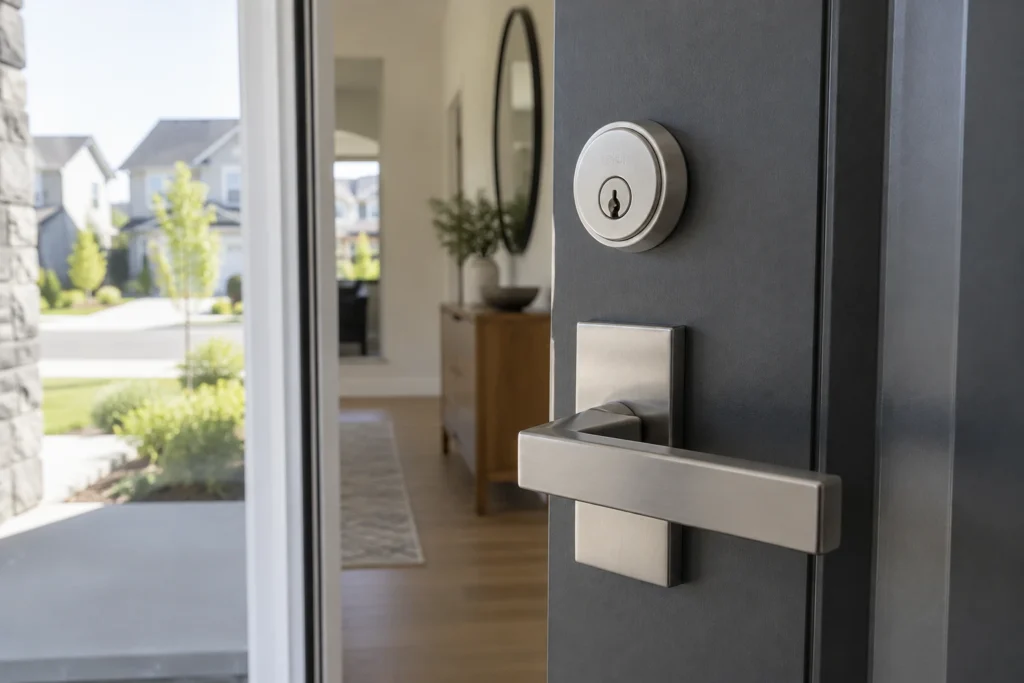
If you suspect a locksmith scam, secure your home by immediately rekeying or replacing any lock the technician touched. In the same hour, reset smart locks and garage codes, then start documenting what happened so disputes stick. This plan is written for Georgia homeowners, with an Alpharetta focus, and shows what to do in the first two hours to restore control, what to file within six hours to recover your money and alert authorities, and how to wrap replacements and prevention by the end of the day.
Act quickly even if you are unsure whether the work was legitimate. Many homeowners later realize the drilling felt unnecessary, pricing was not what was quoted on the call, or unknown keys could still work. The sooner you lock down access, preserve records, and start payment and reporting steps, the more leverage you have with banks, platforms, and property managers. A careful reset now also reduces the chance of repeat exposure or a second visit under a different company name.
0 – 2 hours: Lock it back down and capture proof
Start with the doors the tech handled. If the hardware still functions, a rekey gives you new keys and cuts off any copies tied to the old pins. If you see drilled holes, stripped screws, misaligned latches, missing strike plates, or a brand swap you did not approve, consider full replacement. If you are deciding which path fits, see a brief guide on repair vs. replace your locks at Should You Repair Or Replace Your Locks. Move through the home methodically so you do not miss a compromised entry point or digital back door.
- Rekey or replace affected locks: front, back, garage-entry, basement, side doors, and any auxiliary locks like sheds and gates. If you rekey, request a full repin to a single change key, ask the tech to remove any master pins, and replace any cylinders the scammer installed with known, trusted brands.
- Handle mailbox exposure: if you have an individual, homeowner-owned mailbox with a user-serviceable cam lock, plan a same-day cam lock change so mail does not sit exposed. If the mailbox is a USPS-controlled cluster box unit or a shared/community unit, do not attempt a lock change yourself; you must request this through the local Post Office or your property management.
- Reset smart locks and keypads: factory reset devices that were touched, set a new master PIN, remove guest e-keys, and revoke any app users added during the job. Prioritize changing your smart lock and related cloud account passwords, sign out of all sessions, and enable two-factor authentication. Only change your Wi-Fi password if the tech was given network credentials or had unsupervised access to your router or devices; if not, rejoin devices after account resets.
- Re-secure garage access: change the exterior keypad code, clear all paired remotes from the opener memory, then re-pair only remotes you control. Review any garage door apps and remove old users or linked accounts you do not recognize.
- Safeguard vehicles and integrated access: keep all vehicle keys and fobs secured. If a key or fob is missing or you suspect it was copied, schedule a dealer or qualified automotive locksmith to erase all but current keys from the vehicle’s immobilizer memory. Review and clear any programmed HomeLink buttons and remove your vehicle from garage-door or smart-home apps it was linked to.
- Audit alarm and cameras: change the alarm panel master or programming codes, remove old users, and update passwords for monitoring portals and mobile apps. Change passwords for any connected cameras or doorbells, enable two-factor authentication where offered, and review device share lists for unknown users.
- Capture proof while details are fresh: photograph door edges, hardware, and any damage or swapped brands. Screenshot the ad or listing you used, the price claims, call logs, texts, and the invoice. If safe, note the vehicle plate and any ID the tech showed. Keep everything together for disputes and complaints, since clear documentation helps processors and regulators understand bait-and-switch, unauthorized work, or damage.
The goal of this first pass is to close obvious gaps, strip out any digital footholds, and make sure only your keys and codes work. Key control matters here, so write down exactly who has a physical key, collect what you can, and retire the old keyway with rekeying. If you want a deeper dive on methods, see key control and code resets at Key Control. These steps also address common homeowner questions after a bad service call, like whether the technician could return, whether a copied key might still work, or how to prevent remote unlocks through forgotten apps or codes.
2 – 6 hours: Start payment remedies and Georgia reporting
Move quickly while processors can still reverse charges and platforms will review fresh evidence. Tell your card issuer or bank what actually happened using accurate terms such as deceptive ad, bait-and-switch pricing, work not as described, or unauthorized damage, and attach your photos, screenshots, and invoice. With a credit card, ask to open a dispute under services not as described or deceptive sales practices and request timelines and any additional proof they recommend. With a debit card, call your bank to ask about their dispute window and documentation standards, since debit protections vary by institution and terms; outcomes and deadlines can differ by issuer, so check your specific cardmember agreement. If you paid via Zelle or Cash App, submit an in-app request and open a fraud or scam claim with attachments, recognizing results vary. For cash or a cleared check, send a written refund request by email and text, and strengthen your position with an incident number and a state complaint.
Report the conduct so it does not repeat and to support your dispute. File a complaint with the Georgia Consumer Protection Division at the Georgia Consumer Protection Division complaint page File A Complaint. (https://consumer.georgia.gov/resolve-your-dispute/file-a-complaint.) Strong complaints list the business name used in the ad, phone numbers, the ad itself, the invoice, what the tech said versus what they charged or did, the amount paid, and your evidence. Use platform tools to report misleading online listings at the same time, submitting screenshots of false addresses, bait pricing, or name mismatches alongside your invoice and photos of the actual work. If you believe a crime occurred or there is property damage or trespass risk, contact local law enforcement for a report or incident number to support banking disputes and, if applicable, insurance.
6 – 24 hours: Finish repairs, coordination, and prevention
Decide what to fix versus replace by function, damage, and trust in the installed hardware. Hardware that was drilled, loosely reassembled, or swapped for an off-brand you did not approve is a replacement candidate, while functional locks can usually be repinned cleanly to cut off old keys. Keep egress safety in view when choosing hardware. If you are considering a double-cylinder deadbolt, review double-cylinder deadbolt legality in Georgia and safer alternatives at Are Doublecylinder Deadbolts Legal In Georgia Egress Fire Code And Safer Alternatives For Homes And Businesses (Are Doublecylinder Deadbolts Legal In Georgia Egress Fire Code And Safer Alternatives For Homes And Businesses) before you buy.
Handle mailbox and community access with the right channel. For individual, homeowner-owned mailboxes that use a keyed cam lock, complete the cam lock change if you did not do it during the initial triage so only your new key works. For USPS-controlled cluster box units or shared mailrooms, submit a lock and key request through your local Post Office or coordinate through your HOA or property manager, since only USPS or authorized management can service those units. For HOA amenities like gate fobs and pool cards, request deactivation and new credentials through management so old ones stop working.
If the company refuses a refund and your loss is within Georgia Magistrate Court limits, you can consider filing a small claim. Typical packets include your narrative, photos, screenshots, invoice, and any incident number; file in the proper venue, serve the business at a valid address, and set expectations for a judgment or settlement. This is general information, not legal advice, and you can consult an attorney if you need guidance on venue, service, or evidence.
Renters should review the lease and coordinate with the landlord or property manager, since many leases require written authorization for rekeying and specify who pays. Explain that rekeying restores key control after a suspected scam and provide receipts to support your request. Ask your homeowners or renters insurer whether a security compromise or suspected fraud can trigger rekey or replacement coverage, and share your photos and incident number; describe the situation clearly without implying routine wear and tear.
Prevent a repeat and who in Alpharetta can help
Use a simple, evidence-first vetting script next time. Georgia has no statewide locksmith license, so do not rely on license claims or just vehicle branding. Verify a real local street address that is not a mailbox, check the company’s registration with the Georgia Secretary of State, and ask for an ID badge and the company name on arrival. Before work starts, require a written estimate that lists the method to be used and the exact hardware model, with clear pricing and no vague starting at language or cash-only demands. If anything feels unclear, pause until the scope and price are specific and in writing.
Keep control going forward with layered habits that do not depend on a single key. Use keys that are difficult to copy and keep distribution short and current. Rotate keypad codes on a schedule, limit guest codes to dates and times, and remove integrations that can unlock doors if you are not actively using them. Review alarm, camera, and doorbell user lists quarterly, enable two-factor authentication, and store photos of your hardware and key markings in a secure place for fast reference if you ever need to rekey again.
Resource for Alpharetta homeowners: Lion Guard Locksmith’s site states they are a local, family-run company focused on community safety, offering professional locksmith services in Alpharetta across residential, commercial, and automotive needs. Their pages list Areas served: Alpharetta GA and describe honest, reliable, and affordable service with security as a priority. Contact details on the site list Phone: 678-233-2989 and Email: Info@lionguardlocksmith.com, and the service sections include Residential Locksmith, Commercial Locksmith (Commercial Locksmith), and Auto Locksmith (Auto Locksmith). The site also notes that rekeying provides a clean reset without replacing functioning hardware, and their Lockout Solutions content includes a practical Emergency Locksmith walkthrough that explains what to expect.
Close the loop within 24 hours: re-secure every physical and digital access point, preserve and file your evidence, start payment and consumer protection remedies, and then tighten key and code control using a vetted local pro when needed.