
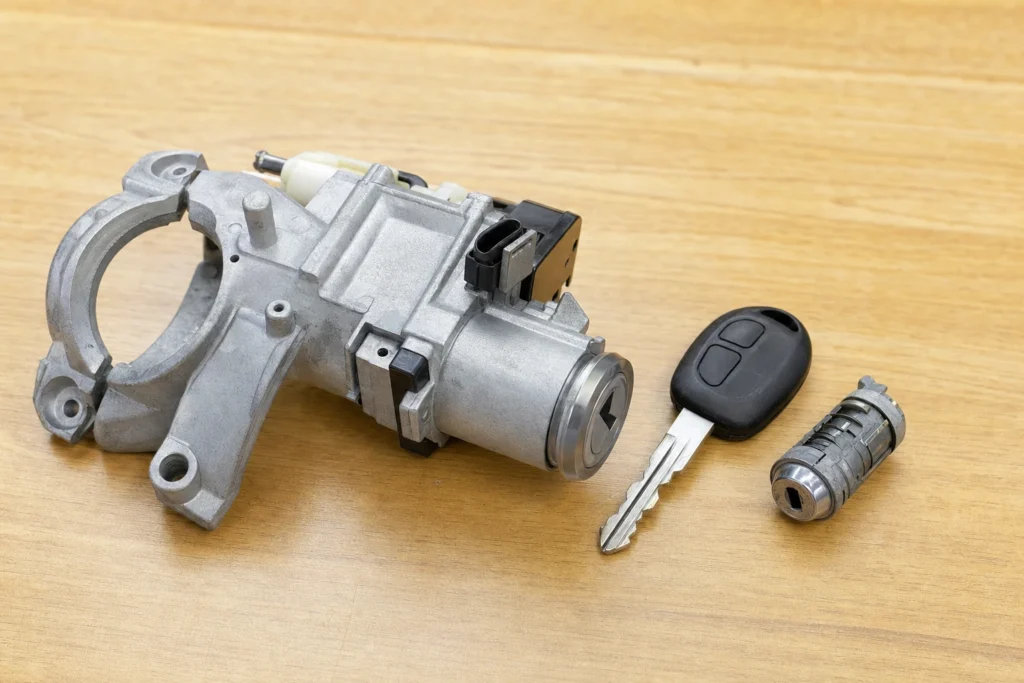
A push-to-start car checks several things in a split second before it cranks. If even one answer in that chain is “no,” you get silence, a blinking icon, or a key that will not release. That is the big change you feel this year: ignition problems are less about a single worn part and more about a tight conversation between the key, steering column, brake switch, and body electronics.
This guide focuses on what is actually new in 2026 and how those updates change the way you diagnose and fix no-start and key cylinder issues. If you need help after running the checks below, our team can point you to the right solution through our Contact Us page.
What actually changed in 2026
Proximity keys keep getting smarter. More 2026 models rely on ultra-precise location checks to block relay-style theft, which means your fob must be in the right place with a healthy battery before the system will authorize start. You may notice “Key Not Detected” even when the fob is inside the cabin or intermittent starts that magically work after moving the fob or replacing its coin cell. That is not a coincidence. The authorization window is tighter, so weak fob batteries, phone interference, or shielding from a bag or case show up more often as no-starts.
Electronic column locks and brake switch logic now play a bigger role too. On many push-button vehicles, the engine will not attempt to crank unless the brake switch confirms pedal press and the steering lock reports “unlocked.” Low battery voltage or a recent battery swap can confuse these modules. It is increasingly common to see a steering lock or immobilizer message right after a battery change if the system needs a relearn or loses its stored state. None of that points to a broken engine. It points to a security handshake that did not finish.
Symptoms that hint at 2026 tech, not just a worn key
A dash that wakes for a second, then blacks out when you hold the start button, often signals a security or brake switch veto rather than a dead starter. Watch your brake lights while you press the pedal. If they do not light, the switch is not confirming the press, so the car will not even try to crank. Likewise, if the wheel stays locked and you see a steering-related message, the column lock motor may not be reporting “unlocked,” which prevents start even if everything else is fine.
A metal key that turns with no dash response is still a classic mechanical clue. That points toward a worn cylinder or a key blade that no longer lifts the wafers to their exact heights. Another tell for the software side is a start that catches then immediately stalls. That is the immobilizer canceling fuel or spark because it did not validate the key. In contrast, a key that will not come out of the ignition or a push-button car that will not shift out of Park often traces back to the shifter interlock sensor, not the ignition itself.
A 5‑minute check sequence before you call
Try these safe, noninvasive steps. Each one rules in or out a common 2026 roadblock.
- Check the fob battery: Replace the coin cell or try your spare fob. Keep phones, metal cards, and other fobs away during the test.
- Confirm brake lights: Press the pedal and look for brake lights in a reflection. No lights usually means the switch is not authorizing start.
- Nudge the wheel: Gently load the wheel left and right while pressing Start or turning the key. A stuck column lock may release.
- Re-seat Park or try Neutral: Move firmly into Park, then test start. If possible, hold the brake and try starting in Neutral.
- Verify battery state: If you have a basic meter, aim for about 12.4 – 12.6 volts engine off. A weak battery can scramble module handshakes.
If any step changes the symptom, you have usable evidence. For example, a new fob battery that restores normal starts points to proximity authorization, not a failing starter. If nothing changes, a deeper diagnostic scan is the next smart move.
What Ignition Repair services look like this year
Professional technicians now begin with a scan of the body, steering, and immobilizer modules. That pulls trouble codes and live data for the brake switch, column lock status, key antenna signals, and authorization results. On metal-key systems, a contractor should check the key’s cut against the original code instead of copying wear into a new key, then inspect the cylinder wafers for tilt or binding. On push-to-start vehicles, software pairing and relearns are often part of the repair after a battery event or module replacement. The goal is the same as ever, but the steps now respect both the hardware and the handshake.
If you prefer expert help, start with our page for automotive locksmith services. You can also review the full scope of support on our Services page. For fast scheduling or questions about 2026 updates on ignition repair services, send a note through Contact Us. The sooner you document the symptom and what you tried, the faster a pro can pinpoint the true cause and get you moving again.