
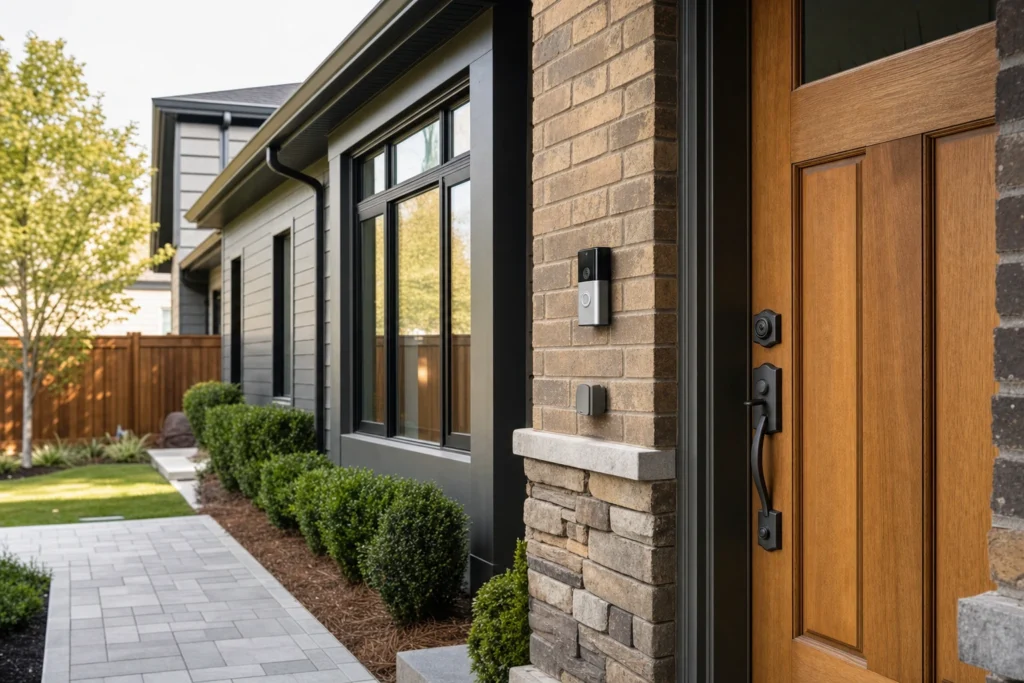
You lock the front door, but the garage side door sticks, the back slider never quite closes, and a spare key still lives under the planter for “just in case.” That low-level worry is the problem. Most intruders look for the simplest path so small gaps and old habits become the invitation.
Stop the quick entry tricks
Start with your exterior doors. A deadbolt should extend a full inch into the door frame. If the bolt feels spongy or the cylinder wiggles, the lock is not doing its job. On the frame side, replace the short screws in the strike plate with 3-inch screws that bite into the wall stud, not just the trim. The same upgrade applies to the hinges. This inexpensive fix makes quick kick-ins much harder.
Check the door itself. A solid or metal-clad door resists force better than a hollow core. If a door rubs the jamb, that friction tempts you to leave it just shy of locked. Plane or adjust the hinges so the latch and bolt align cleanly. For sliding doors, add a dowel or security bar in the track and use a pin lock so lifting the panel is not an option.
Windows need attention too. Latches are not always locks. Add secondary locks on easy-to-reach ground-floor windows. If you love to vent with a small opening, use a restrictor that limits the gap but still lets air.
Build a 60-second nightly lock routine
Home security collapses when it depends on memory at the end of a long day. A short, repeatable routine works better than a complicated system you ignore. Pick a consistent time, tie it to a habit you already have, and make the steps visible so other family members can help.
Use this quick sequence each night:
- Lock and check all exterior doors, including the garage entry and the door from the garage into the house. Use this quick sequence each night: 1. Lock and check all exterior doors, including the garage entry and the door from the garage into the house.
- Close and lock ground-floor windows, then tilt blinds or curtains closed.
- Set the alarm if you have one, and confirm the chime is on for door openings.
- Turn on a porch or coach light and a lamp on a timer near a front window.
- Make sure vehicles are locked and remove garage door remotes from the visor.
- Place keys and wallets in a consistent spot that is out of sight from windows.
Write the list once, post it near the most-used door, and after a week it becomes automatic. If you prefer a digital nudge, set a nightly phone reminder labeled “Lock check.”
Control your keys and codes
Locks are only as secure as the keys in circulation. If you have moved into a new place, lost a key, changed roommates, or hired contractors who borrowed a spare, rekey the locks so old keys no longer work. That gives you a clean slate without replacing entire locksets.
Keep key copies intentional. Avoid labeling keys with your address or last name. If you use smart locks, give each person a unique PIN and delete it when access is no longer needed. Change default codes, update firmware on a schedule, and turn on code alerts so you know when doors are opened. If you want help choosing hardware or planning a rekey, explore our Residential Locksmith options.
Use lighting and visibility to your advantage
Light does not guarantee safety, but darkness makes it easier for someone to test doors unnoticed. Motion-activated lights over entries and side yards send a clear signal that movement will be seen. Indoors, a couple of lamps on smart timers create normal-looking patterns when you are out for the evening.
Think about sightlines. Trim shrubs below window height, keep porches uncluttered, and make sure your house numbers are readable from the street. Packages stacked by the door can cue that no one is home. If you are away, schedule deliveries or use a pickup locker so boxes are not advertising an empty house.
Layer simple tech without the headaches
Video doorbells, contact sensors, and smart locks help when they are set up thoughtfully. Start with the basics you will actually maintain. Put door sensors on the entries you use daily so you hear chimes when they open. Place a camera where it can capture faces approaching, not just the sidewalk. Replace batteries on a fixed calendar and keep your apps updated. You can always add more devices later, but a few reliable tools beat a dozen forgotten gadgets.
If you are debating whether to upgrade, our article on system improvements makes the same point: tighten the chain of defenses, do not chase shiny features. For help comparing options, see our overview of Services.
When to bring in a professional
There are moments to stop troubleshooting and call for help. A key that only works if you jiggle it, a deadbolt that does not fully extend, and a door frame starting to split are not quirks, they are risks. After a move, a lost key, a tenant change, or any sign of tampering, have the locks assessed and rekeyed or replaced. A short visit now is cheaper than dealing with a break-in later.
If you want a friendly walkthrough of your home’s weak points and practical fixes you can do this week, reach out through Contact Us. Make this the year you put simple, proven home security tips into practice, then enjoy the quiet confidence that comes with a well-locked home.