
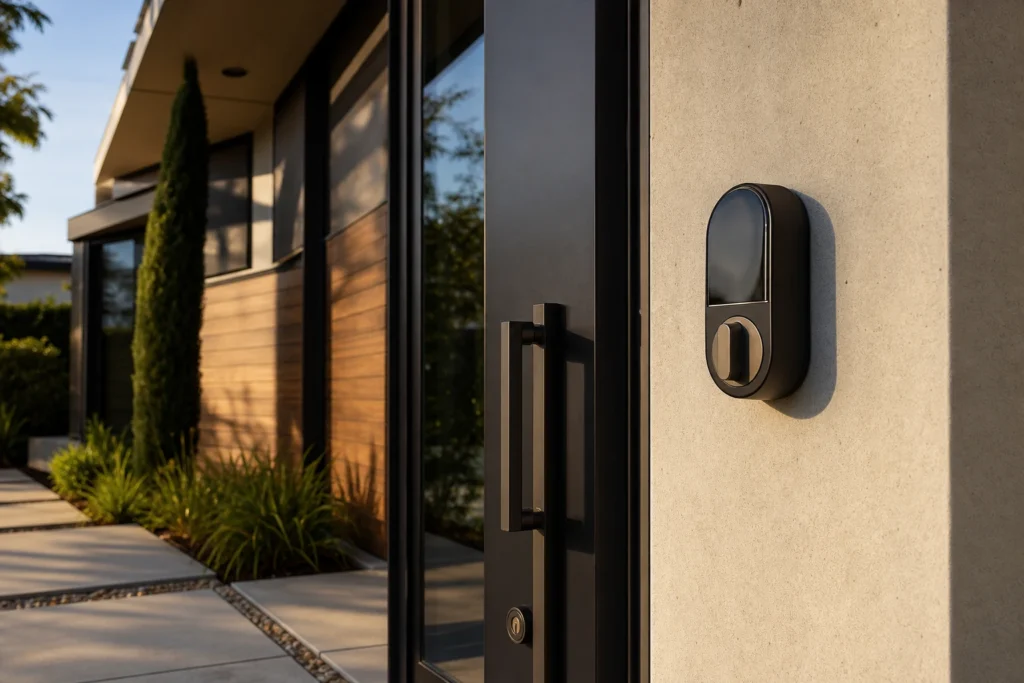
You have two real ways to put a smart lock on your door in 2026: keep your existing deadbolt and add a motorized retrofit on the or replace the deadbolt with a full smart model. Both can work well. The difference shows up in how much you spend, how long it takes to install, and how the door feels and functions every day.
Retrofit Add‑On vs Full Smart Deadbolt
A retrofit add‑on turns the thumbturn of your current deadbolt from the. Your exterior handle and keyway stay the same, so curb appeal and key habits do not change. The upside is minimal door work and a quicker path to app control and codes. The tradeoff is that you are relying on the quality and alignment of your existing hardware. If the bolt already rubs or the key sticks, a retrofit will not fix that, and battery life can suffer.
A full smart deadbolt replaces the entire lock. You get a fresh cylinder or a key‑free face, a new strike kit, and often tighter tolerances than what came with the house. The upside is a cleaner slate for alignment and security upgrades, plus features like keypads or fingerprint readers that are integrated from the start. The tradeoff is more hands‑on installation, and in some cases, light door prep to fit the new hardware.
If your current lock works smoothly and you like the exterior look, a retrofit keeps costs lower and timelines shorter. If your door is fussy or you want a different keyway, keypad, or finish, a full replacement is usually the better long‑term call.
Costs: Where Money Is Actually Spent
With a retrofit, most of your cost is the smart module itself. You may also need a bridge or hub if you want remote control outside Bluetooth range. Because you are reusing the deadbolt, you avoid the price of new exterior hardware. The hidden cost to watch is alignment. A door that needs extra push to set the bolt can drain batteries and create app errors, which means more maintenance time later.
With a full smart deadbolt, the hardware cost is higher because you are buying the whole lock. The value is in the reset: a new latch, bolt, and strike give you a chance to correct fit and reinforce the frame. If you want a keypad, fingerprint reader, or a different finish to match the handle set, those are baked into the purchase instead of added down the road. If you bring in a pro, factor labor for removal, fit checks, and setup. That labor can save you from door damage or a lock that works poorly because of small misalignments.
On both paths, budget for accessories that match how you plan to use the lock. Examples include a keypad for guests, a small bridge for remote control, or reinforced strike screws if your frame is soft pine. This article focuses on the costs and choices for smart locks in locksmith services, so weigh accessories based on real use, not just features in the app.
Timelines: From Order to Daily Use
The timeline has four simple phases, and each plays out differently for retrofit and full replacement.
- Order and prep: A retrofit is usually a single box and goes straight on the door. A full replacement sometimes means matching backset and bore size, and deciding on finish and keypad style.
- On‑door work: A retrofit mounts to the interior and calibrates. A full replacement swaps the latch, bolt, exterior trim, and strike, then tests for smooth throw before pairing.
- App setup and codes: Both paths need pairing and user setup. Expect a few minutes to name the door, add codes, and test notifications.
- Fine‑tuning: If the bolt rubs, you adjust the strike. If remote control needs a bridge, you place it and test signal. These quick checks make the difference between “works” and “works every time.”
A retrofit often fits into a shorter window because there is less hardware to change. A full replacement is still a single‑visit job in most cases, but you should allow a bit more time for alignment and testing, especially if the door or frame has shifted over the years.
Home vs Business Priorities
For a home, convenience features usually drive the pick. If you want to keep a traditional key as a backup and change nothing on the a retrofit is a tidy upgrade. If you want a lit keypad for kids or dog walkers and a fresh start on alignment, a full smart deadbolt is easier to live with long term. If you are lining up a broader home security refresh, browse our Residential Locksmith page to see how a smart lock fits with rekeying and door hardware choices.
For a business, audit and code management matter as much as the lock itself. A full smart deadbolt gives you uniform hardware across doors, better durability at high‑traffic entries, and cleaner role‑based access. Retrofits can work on interior offices that already have good mechanical locks but need scheduled access. If you are planning a phased rollout, start at the main staff door with a full replacement, then fill in with retrofits where appropriate. Our Commercial Locksmith page outlines how door hardware, closers, and strikes work together so daily use stays smooth at opening time.
How to Choose in 60 Seconds
Pick retrofit if you like your current exterior hardware, the key turns smoothly, and you want the fastest path to app control with the least door work. Pick a full smart deadbolt if you want a keypad or key‑free option, need to correct a sticky bolt, or prefer a clean hardware match across multiple doors. If you are unsure, start at the door, not the app: if the bolt glides without extra push, retrofit is viable. If it drags, replace the lock and fix alignment at the same time.
If you decide to bring in a pro, our smart lock installation services focus on clean fit, reliable pairing, and code setup that matches how you actually share access. Have questions about your door or timeline? Send a note through Contact Us and attach a quick photo of the edge of the door and the current deadbolt. It makes the first conversation faster.