
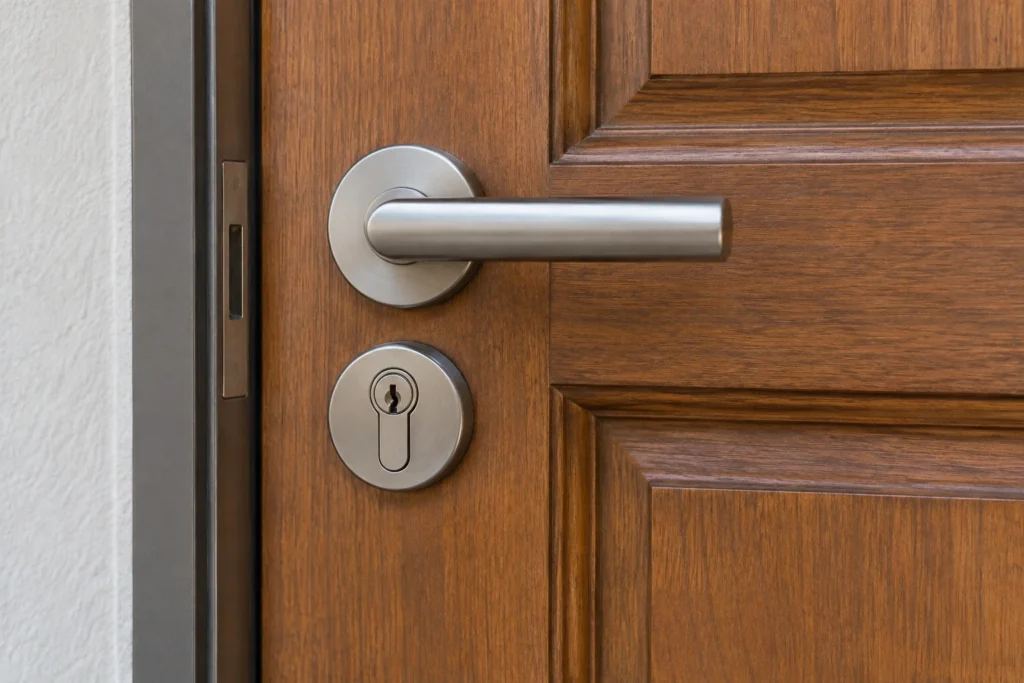
Bottom line first: where double-cylinders are, and are not, allowed in Georgia
A double-cylinder deadbolt takes a key on both sides and is sometimes called a double-sided or double-keyed deadbolt. A single-cylinder takes a key on the exterior and has a thumbturn on the interior. The point of a double-cylinder is to reduce the risk of a reach-in attack, such as when a window or sidelite is broken near the lock and someone tries to turn an interior thumbturn. That security concern is valid, but egress rules prioritize life safety by requiring doors along the way out to open from the inside without a key, tool, or special knowledge. Keyed egress can delay escape and create real hazards during fires and other emergencies, which is why these products are widely restricted on egress doors in practice.
In Georgia, most dwelling exit doors must be openable from the inside without a key, and most business exit doors follow the same principle under the International Building Code as enforced by local building and fire officials. A narrow IBC exception may allow a double-cylinder at a main exterior entrance if strict safeguards are met and the Authority Having Jurisdiction approves. Specifically, the lock’s status must be readily distinguishable as locked or unlocked from the egress side and signage must state that the door is to remain unlocked when the building is occupied. This exception is described in IBC guidance summarized by industry code experts and is commonly referenced by inspectors when they review plans and hardware schedules. Even if the main-entrance exception is approved, it does not open the door to using double-cylinders elsewhere in the building, so plan on free egress as the default and treat any keyed interior operation as an exception that must be clearly justified.
How Georgia’s fire and egress rules split for homes and businesses
Residential occupancies prioritize free egress at all times, so exit doors must open from the inside without a key. In practice that applies to the front door, back or side doors used for exit, and the door between an attached garage and the dwelling. A double-cylinder on any of these egress doors would typically conflict with the free-egress requirement because anyone inside would need a key to leave during an emergency. The life-safety intent behind this rule is straightforward: eliminate delays and confusion so occupants can get out quickly when seconds matter.
In commercial occupancies, the IBC governs egress and generally prohibits keyed operation from the egress side on required doors. A narrowly drawn IBC exception for a main exterior entrance may permit a double-cylinder only when two core conditions are met: the door’s locked or unlocked status is immediately visible or otherwise readily distinguishable and signage is posted indicating the door must remain unlocked when the space is occupied. Industry code guidance explains that these safeguards exist to preserve free egress while accommodating certain security needs at a single public entrance, not to authorize keyed egress on secondary exits, service doors, or doors within the egress path. Local building and fire officials interpret and enforce the code, so what is allowed on one project may be disallowed on another based on the door’s role in the egress path, occupancy type, or overall life-safety plan.
A Georgia-ready precheck before you spec or approve a double-cylinder
Before you commit to a double-cylinder, use this quick precheck to sort out whether the idea is even viable. It is designed for homeowners, business owners, and property managers who want to avoid failed inspections, rework, and change orders. The goal is to align your security intent with the life-safety rules that apply on your site and to document approvals up front.
- Identify the door’s role. Is it part of the path of egress people would use to exit, or is it non-egress? If it is egress, assume a double-cylinder is not allowed and proceed only if you can document an applicable exception.
- Confirm which code path applies. Residential versus commercial occupancy determines whether the door follows residential egress rules or the IBC.
- If you believe the IBC main-entrance exception might apply, verify the exact conditions on your door: required signage language, visibility of locked or unlocked status, and whether the door is truly the primary public entrance.
- Ask your local building or fire official in writing. Provide the door location, hardware function, and photos. Keep the approval email or letter in your project file.
- Make the scope explicit. Your hardware schedule should call out the cylinder function, interior operation, signage, and any monitoring components so the installed condition matches what was approved.
- Build a fallback. If the AHJ says no, decide now what compliant hardware you will use instead so the job does not stall on install day.
After the precheck, reconcile your plan and your backup option against the inspector’s feedback and the door’s actual use. Pay special attention to signage wording and how lock status will be distinguished, since these details often trigger corrections late in a project. Unique situations, such as historically significant buildings or unusual commercial applications, may be reviewed differently, but these are still handled case by case by the AHJ and do not change the baseline need for free egress. Document what will be installed and how it satisfies the code path, then make sure procurement and installation teams have that same written scope.
Safer, code-friendly ways to get the same security without a double-cylinder
If the risk is a reach-in attack near glass, you can harden the opening without adding a keyed interior. A single-cylinder deadbolt combined with a reinforced strike, longer screws into the framing, and a quality latch can significantly improve forced-entry resistance while preserving free egress. To reduce break-and-reach risk, consider laminated glass or a well-vetted security film on adjacent glass, or relocate the interior thumbturn farther from glass where feasible. These options may involve a locksmith or glazier and can require minor door or frame prep, but they keep operation simple and code-friendly.
If the concern is key control or day-to-day management, rekeying to a restricted keyway helps prevent unauthorized copies while leaving the interior thumbturn in place. Many smart deadbolts and access control setups preserve free egress on the inside while adding scheduling, audit logs, remote status, and auto-lock features on the outside. Plan for power or battery maintenance, ensure the lock is compatible with your door prep, and coordinate any monitoring with your security vendor so the installed system clearly shows locked or unlocked status from management software without impeding egress. For businesses that need the exterior secure after hours, consider hardware combinations that lock from the outside while remaining non-lockable from the inside, supplemented by signage and monitoring to align with code expectations.
Conclusion
Treat free egress as the rule and double-cylinders as the rare exception that must be justified and approved in writing. Start by classifying the door, then confirm your code path and ask your local building or fire officials whether the IBC main-entrance exception applies to your case, including the specific signage and lock-status visibility they will require. If approval is unlikely or conditions are unclear, pivot to alternatives that harden the opening without introducing a keyed interior. The most common pitfalls are assuming a main-entrance exception applies to other doors, omitting required signage or status indicators, and failing to align the installed hardware with what the AHJ actually approved.
For related details, review A Better Question to Ask Before You Approve the Work and What to Do When You’re Locked Out of Your House with a Child: Safety Tips for Parents.
These guardrails exist to protect life safety. Industry code resources explain that keyed egress can slow or prevent emergency exit and that any allowance for a double-cylinder on a main entrance is conditioned on clear lock status and prominent “remain unlocked when occupied” signage to mitigate that risk. In short, build your plan around free egress and use documented exceptions only when they truly fit your specific door and have been accepted by your local Authority Having Jurisdiction.