
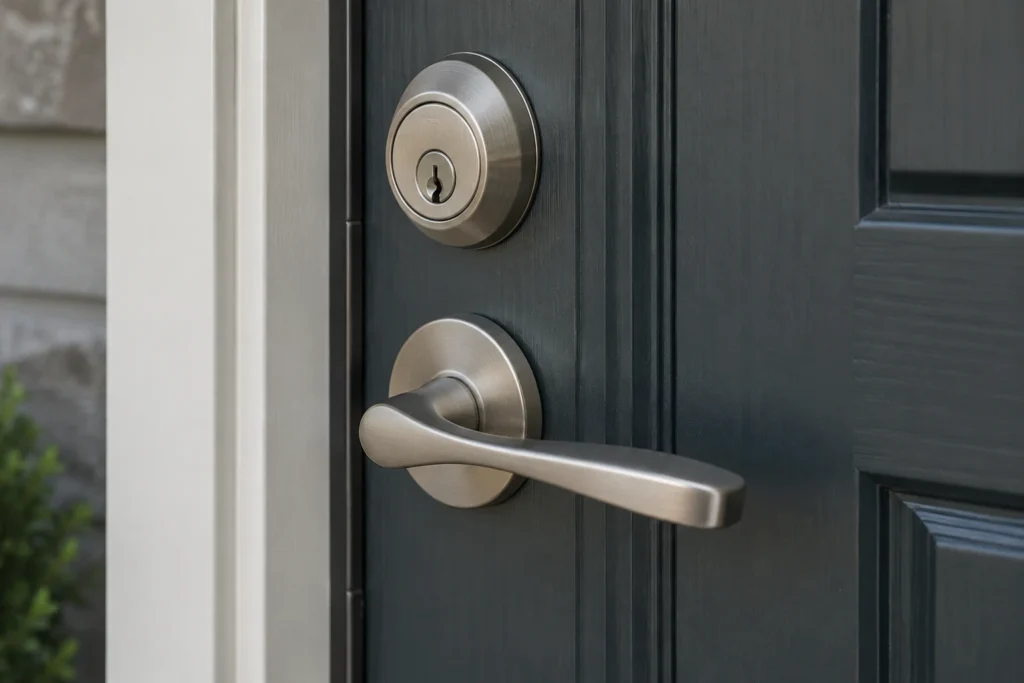
Georgia homeowners gain real security and fewer emergencies when they run a simple key control program instead of reacting case by case. The core idea is straightforward: decide who can open which doors, prevent walk-in duplication, and keep a documented fallback so a lost key or dead battery does not become a crisis. In practice, that means scheduling rekeys at predictable triggers, putting real controls around duplication or code sharing, keeping concise records, and setting a dependable secondary access plan. This approach fits typical Georgia households and aligns with what Lion Guard Locksmith sees every week in Alpharetta homes, rentals, and townhomes.
Residential key control works because it removes ambiguity. Moves, renovations, sitters, and guest stays create drift that multiplies untracked keys and codes. A clear program turns those drifting decisions into a routine that closes copy paths and sharply reduces lockouts. When you standardize who holds keys, how codes are issued and rotated, and where a sealed spare or keypad fallback lives, you interrupt the classic lockout chain of no spare, no neighbor, and a dead battery in the rain. A Do Not Duplicate stamp on a common key is only a courtesy request, so build real control into your system rather than relying on the stamp.
Reset control first, then choose how you will grant access
The fastest practical way to regain certainty in most homes is to reset which keys work and who holds them. Rekeying provides a clean reset so only new approved keys operate your locks without replacing good hardware, and it is the practical first step when you take possession, turn over a tenant space, or finish a renovation. Lion Guard’s Rekey Services: A Practical Walkthrough explains how rekeying delivers that clean reset and advises it for immediate triggers like taking possession this week, during tenant turnover, or after a renovation. If your locks are sound and fit your doors well, schedule a rekey and start fresh with new keys and a clean holder list.
Replacement becomes the better choice when hardware is worn, when you want features your current locks cannot support, or when you intend to consolidate doors onto a single platform such as a restricted keyway system or a keypad. Compatibility varies by brand and series, so have a technician assess whether your existing housings will accept the target cylinder or if Grade 1 or Grade 2 hardware replacement is the right move. If you opt for keypads or smart deadbolts, build in basic hygiene from day one: enable two-factor authentication in the app, keep the owner or admin account separate from shared users, apply firmware updates, restrict app sharing to one household member per login, and review access logs if your lock provides them.
If you stay with traditional keys, plan your control method rather than leaving duplication to chance. Standard cylinders work well when paired with a rekey policy you will actually follow at triggers like move-in, roommate changes, or a lost key. If stopping casual copying is important, move important doors to a restricted or patented keyway that limits blank availability and requires authorization for cuts. Keypads and smart locks excel for short-term access and code-based sharing, but pair them with a weather-safe mechanical backup and a fixed battery change schedule so electronics do not become a single point of failure.
Control duplication and document what matters
The biggest misunderstanding is the Do Not Duplicate stamp. A DND mark on a common key blank is only a request to the person at the counter, and many kiosks or counters will still cut it when compatible blanks exist. That creates misplaced confidence for homeowners who assume the stamp locks down duplication. True copy control comes from a restricted or patented keyway that limits blank availability and ties cutting to formal authorization. For homeowners, the practical implications are simple: choose systems with active patents or formal authorization programs, confirm there is a local dealer or locksmith who can support that keyway before you commit, use serialized keys that are stamped or engraved for accountability, and keep an authorized signer card on file with your servicing locksmith so only named people can request duplicates.
If you want a plain-language overview of restricted keys in Georgia, our Georgia explainer breaks down how patented and dealer-controlled keyways actually stop casual copying in this state and how those same rules apply at home. The title focuses on businesses, but the mechanics are identical for your front door. If you are considering a change, decide which doors truly need restricted keys and which can remain standard to balance cost and control.
Light documentation keeps control intact without creating paperwork for its own sake. Maintain a key holder registry, a simple sign-out and sign-in log for any shared keys, an incident note you complete when keys are lost or stolen, a short contractor key or code agreement, and an emergency access authorization for one trusted contact. Label household keys with a code rather than an address, and store your records where every decision-maker in the home can find them quickly. If you would like ready-to-use templates, Lion Guard can provide a downloadable set on request so you can implement this with minimal setup.
Run these playbooks in common household situations
These situation-based routines make decisions easy when you are busy and help you act before risk grows. They mirror what drives many urgent calls in our Emergency Locksmith: A Practical Walkthrough and turn them into quick, predictable checklists you can follow without guesswork.
- Move-in or move-out. Rekey all exterior doors the day you take control, then log a clean list of key holders and active codes tied to dates. Destroy or permanently deface old keys after the rekey, or store them in a tamper-evident envelope separate from daily access, and clearly mark any cylinders removed from service. Factory-reset the garage opener, clear paired remotes and vehicles, reprogram exterior keypads, and update any Wi-Fi hub credentials tied to your locks or garage. Keep the rekey invoice with your records so you can prove the reset if needed.
- Adding or removing a roommate. Issue a labeled key or a unique code with a clear start date and household rules. When someone moves out, collect the key, revoke their code that same day, and note the change in your registry; if the key is not returned, rekey the affected doors rather than waiting for a problem to surface.
- Contractors and cleaners. Prefer time-bound keypad or smart lock codes and revoke them at job completion; review the app’s access logs if available. If a physical key is unavoidable, use a restricted keyway and a signed contractor key agreement that sets no-copy expectations and a return-by date. To save setup time, request Lion Guard’s contractor agreement template.
- Short-term guests. Use a dedicated temporary code that auto-expires on checkout if you have a smart deadbolt, or a reprogrammable mechanical combo you change after every guest. True one-time codes require an electronic lockbox; if you must use a physical key, place it in a quality lockbox you re-code between guests and keep your permanent household code private.
- Lost key. Treat it as a security incident rather than a wait-and-see moment. Rekey affected doors, update your key holder list, and reissue keys immediately; if you use key tags, avoid any address or unit detail so a found tag does not point to your home.
- After a break-in. Repair any damage, rekey or replace every affected door, and reset credentials on smart locks and garage systems, including clearing paired remotes and vehicles. Capture an incident note with dates, actions taken, and any police report number so you can reference it later.
- Preparing to sell. Use a Realtor-managed lockbox with code logging if available, or a showing code you rotate on a fixed schedule and retire after the listing goes pending. Keep a daily code-change routine so access does not linger after showings.
Close each playbook by updating your registry and, where applicable, scheduling the next code rotation or battery change. This keeps your records aligned with reality so you are not guessing who can get in after a busy week or a life change. Over time, the playbooks take the place of ad-hoc decisions and greatly reduce both unauthorized copies and preventable lockouts.
Engineer out lockouts and maintain control month to month
A secondary access plan is essential because phones die, batteries fail, and keys get misplaced at the worst time. In our Emergency Locksmith: A Practical Walkthrough, many urgent call scenarios revolve around no spare, no one authorized to help, or a dead keypad battery. You can break that pattern by pairing your primary method with a discreet, weather-rated lockbox, a neighbor-held sealed envelope, or a mechanical key override for your smart lock. Treat lockboxes with care: choose a solid model, mount it where it is not obvious from the street, and rotate the code on a schedule tied to your quarterly maintenance.
Maintenance and small habits keep your system reliable. Rotate keypad and smart lock codes quarterly or after any guest turnover, and change batteries proactively instead of waiting for warnings. Keep owner or admin app logins private, enable two-factor authentication, and do not share accounts across multiple household members when you can assign separate users. If your lock provides logs, review recent entries after contractors finish or after travel so you can spot issues early. For mechanical locks, lubricate annually with a lock-safe product to avoid wear that can turn a stick into an avoidable drill-out.
Run a seasonal audit so drift does not creep back in. Twice a year, list every person who has a key or code, revoke anything not needed, decide if a rekey is due based on recent life events, and confirm your backup still works. Tie this to easy calendar anchors in Georgia like post-holiday cleanups in January and back-to-school in August, and you will catch most household changes without thinking about it.
Georgia notes and when to call a pro in Alpharetta
Before you change hardware or add features, verify any egress or HOA restrictions that apply to your home or community. If you are considering keyed double-cylinder deadbolts, review our overview, Are Double-Cylinder Deadbolts Legal in Georgia?, for code context and safer alternatives. If you own a rental, make sure your key control steps align with your lease and any applicable rules. This article is not legal advice, so confirm specifics for your city or HOA.
For related details, review Copy‑Paste Locksmith Authorization Templates for When You Can’t Be There (Home, Car, Business, HOA) and Copy‑Paste Locksmith Damage Waiver & Drilling Consent Templates (Home, Car, Safe) for When.
Call a professional when a key is lost and could be tied to your address, after any turnover event, if you suspect unauthorized copies, if keypad codes have spread beyond your control, or when hardware is sticking, spinning, or unreliable. If you want help putting this program in place, start with a rekey and a clean inventory using Rekey Services: A Practical Walkthrough, then, if you need deeper copy control, review the Georgia explainer on restricted keyways and apply the same rules at home. Lion Guard Locksmith is a local, family-run team specializing in residential service in Alpharetta, and we are available at 678-233-2989 or Info@lionguardlocksmith.com to help you put rekey policies, controlled duplication, clear documentation, and a dependable backup access plan to work in your Georgia home.