
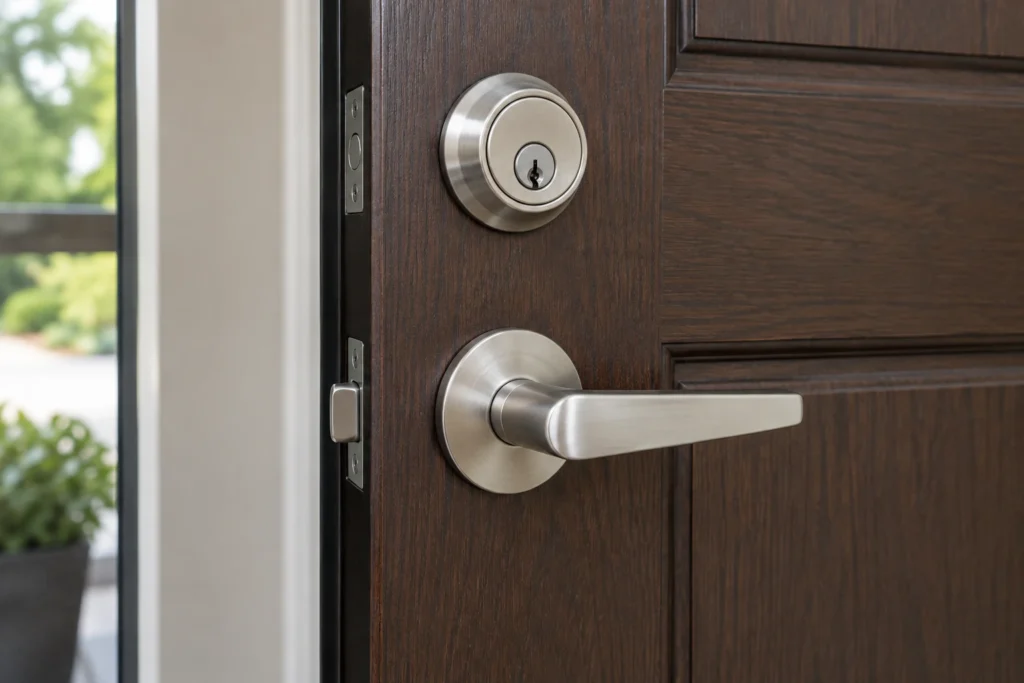
If you’re locked out, calling a professional locksmith like Lion Guard Locksmith is the safest and fastest option. This choice protects your door and frame while allowing you to conduct a few checks that can save time and prevent damage.
First moves that save time and prevent damage
Start with a quick safety triage. If a child, pet, or anyone with medical needs is inside, or if weather conditions make waiting dangerous, call emergency services. First responders prioritize life safety and may force entry, so make that call only when there is a real risk. If you are simply stuck outside, avoid viral “tricks.” As explained in our House Lockout resources, the credit card and hairpin era is over, and a hard kick often turns a minor mistake into a major repair.
While you wait for help, confirm you have no safe alternate entry by trying every door. Do not break windows; injuries and replacement glass are almost always more expensive than a service visit. Call anyone who might hold a legitimate spare key, and if you keep a lockbox on-site, verify the current code. Gather basic proof of occupancy, such as a driver’s license with your address, a lease, or a utility bill on your phone to speed up verification. Light the work area and clear obstacles at the door to reduce trip hazards and speed the job. Avoid spraying unknown lubricants into the keyway, as the wrong product can gum up the cylinder and complicate entry.
For a deeper myth-to-method explainer, see our House Lockout guidance in House Lockout (2026 Update) and House Lockout: Pro Tips and Pitfalls.
What a professional actually tries first
A good locksmith aims for non-destructive entry before anything else. The method depends on your hardware, door alignment, and strike reinforcement. On properly installed deadbolts, that often means techniques that manipulate the lock rather than the door. Drilling is not the default; it is a last resort for failed cylinders or high-security designs that will not yield safely, and it should come with clear consent before work proceeds.
Expect a few questions up front. Clear photos of the outside and edge of the door help the technician identify the lock type and choose the right approach on the first try. If the hardware is severely misaligned or the frame has shifted, they may address that as part of the visit so the door relatches smoothly after you are back inside.
Smart locks during a lockout: what changes
Smart features can help or hinder. Apps and keypads are great until batteries die, the hub drops offline, or the vendor experiences a cloud outage. If your lock beeps or flashes low-battery, swap cells before they are completely dead. If there is a mechanical key override, keep that key accessible. Many homeowners learn during a lockout that the override was never keyed to match the main set or that the cylinder was not maintained.
When a locksmith arrives to a smart lock, they will still evaluate the underlying mechanical path to entry and the condition of the door and strike. Avoid factory resetting the lock unless you are ready to re-enroll every user and integration; a reset can erase access data and add hours to a simple situation. If you are comparing emergency locksmith solutions, weigh convenience against outage resilience. A smart lock paired with a sound mechanical baseline is ideal, but neither replaces the other in a pinch.
After you are back inside: rekey, repair, and prevent the next one
If keys are lost or unaccounted for, rekeying restores key control without necessarily replacing all hardware. If the cylinder is worn or the door requires excessive force to lock, address the underlying issue rather than living with a sticky turn. For smart locks, update temporary codes shared during the lockout, review auto-lock timing, and replace batteries as a pair or set so the indicator is reliable.
Prevention can be simple. Place a coded lockbox out of sight with a trusted contact holding the code. Store a physical backup key outside the home only in a secure, tamper-resistant box, not under a mat or planter. Keep basic proof of residency accessible on your phone. If you live in a community with HOA rules, ensure any visible hardware changes comply before you upgrade.
Lion Guard Locksmith provides residential, commercial, and automotive locksmith services. If you need help or want to enhance your security to prevent future lockouts, reach us at 678-233-2989 or info@lionguardlocksmith.com.