
Sticker shock during a lockout usually comes from three assumptions: the price is a flat fee, arrival is guaranteed in minutes, and drilling is the default. Those beliefs are common and costly. Here is a clear, myth-by-myth guide to what really drives house lockout costs, timelines, and your best choices in 2026.
Myth 1: “House lockout is a flat fee everywhere”
It sounds simple, but pricing is not one-size-fits-all. A quote is shaped by the lock, the time, and what it takes to open the door without damage. A straightforward spring-latch on a weekday afternoon is not the same job as a stubborn deadbolt on a holiday night. One takes finesse and minutes. The other may require advanced tools, more time, and possibly parts if drilling becomes the last resort.
Most providers structure quotes around a service call plus labor, with add-ons only if parts are needed. The goal, for you and for the technician, is a clean, non-destructive entry that keeps part costs at zero. If you want to see what a full scope of home help looks like beyond lockouts, review our residential locksmith services on the site’s Residential Locksmith page.
Key price drivers you can verify on the phone:
- Complexity of the lock: basic knob, deadbolt, smart lock, or high-security hardware.
- Time and day: standard hours versus late night, weekend, or holiday.
- Access and verification: time to confirm lawful entry and assess the setup safely.
- Method used: non-destructive techniques versus drilling and replacement parts.
- Location realities: distance, traffic, and parking constraints at your address.
Asking the dispatcher, “What could make this cost more than the base quote?” is a smart move. You will hear the factors above and can decide before authorizing work.
Myth 2: “A real pro arrives in 15 minutes, guaranteed”
ETAs are estimates, not promises. On-the-ground realities decide the clock: distance to you, active jobs in the queue, traffic patterns, building access instructions, and how fast you can provide proof that you have the right to enter. A technician cannot start until those last two are clear, which means your prep speeds the whole call.
You can cut delays by texting or describing exact details during dispatch: apartment number and floor, the door location if there are multiple entrances, any gate codes, and the lock type if you know it. Photos sent to the dispatcher, when possible, help the tech bring the right tools the first time. If you are weighing other kinds of help too, the site’s Services page shows how residential, commercial, and automotive calls differ in scope and tooling.
Same-day help is common across the industry, but minute-by-minute promises often ignore realities you and the tech both face. A clear ETA window, plus updates en route, is the professional standard in 2026.
Myth 3: “Drilling is standard and faster”
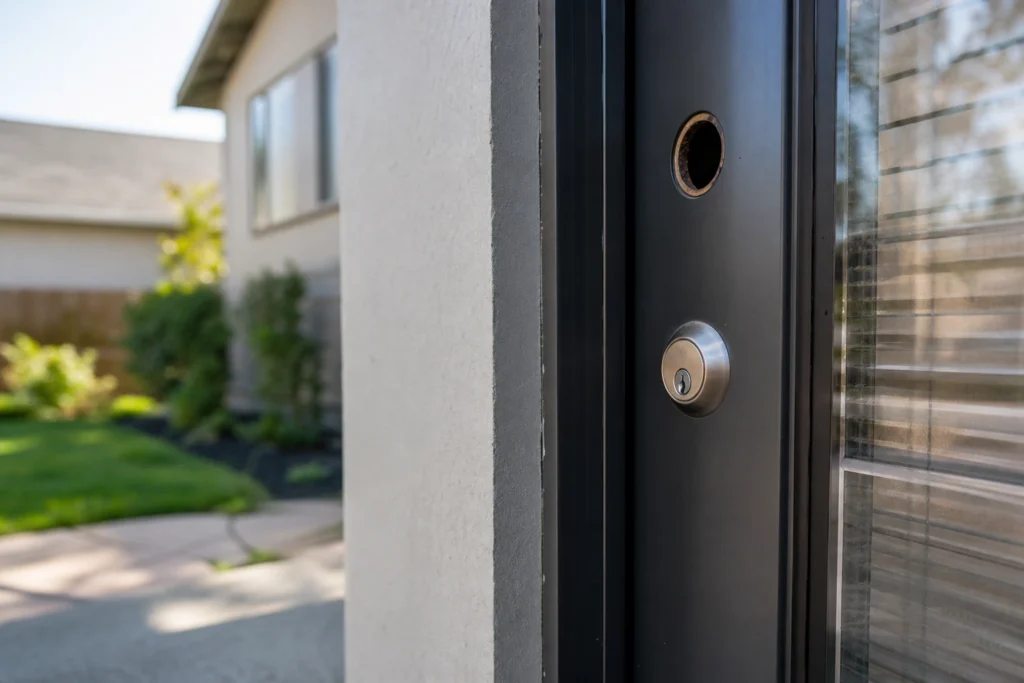
The rule is the opposite: non-destructive first. Skilled technicians pick, bypass, shim, or decode whenever the hardware allows because these methods protect your door and keep part costs down. Drilling is a last resort for failed cylinders, damaged mechanisms, certain smart locks with dead batteries and no keyway, or high-security designs that resist manipulation.
If drilling becomes necessary, plan for two steps: gaining entry and then restoring security. That means either rekeying the new cylinder to your existing keys or installing a replacement lock. Ask the tech to explain both the entry plan and the post-entry plan before work starts. That short conversation protects your budget and avoids a second trip to finish the job.
Myth 4: “DIY hacks cut the bill”
Cards, knives, wire, or improvised wedges are the fastest way to turn a simple unlock into a repair. Many modern residential doors use deadlatches and reinforced strikes that block shimming. Forcing the gap can bend the door edge, mar the finish, or misalign the latch so it sticks after you finally get. Those fixes cost more than a clean, professional entry would have.
If you have a hidden spare, a trusted neighbor with a key, or a property manager who can verify access, those are smart first calls. Barring that, skipping unproven tricks and calling a pro usually keeps both the door and your budget intact. If you need to reach a team quickly, use the site’s Contact Us page so dispatch captures all the details in one place.
What to ask before you approve the job
A short, clear script keeps surprises off the invoice. Ask for the base service call, the labor range for your lock type, and what conditions would add parts or surcharges. Confirm the plan for non-destructive entry and what the fallback is if the lock will not cooperate. Finally, ask about securing the door after entry, especially if drilling might be required.
Costs and timelines get predictable when you strip away the myths. Flat fees are rare because locks and conditions differ. Timelines are honest windows, not guarantees. And the fastest, least expensive outcome usually starts with non-destructive techniques and good information upfront. If you want help planning or you need an assist right now, review the site’s overview of locksmith services or send a note through Contact Us.