
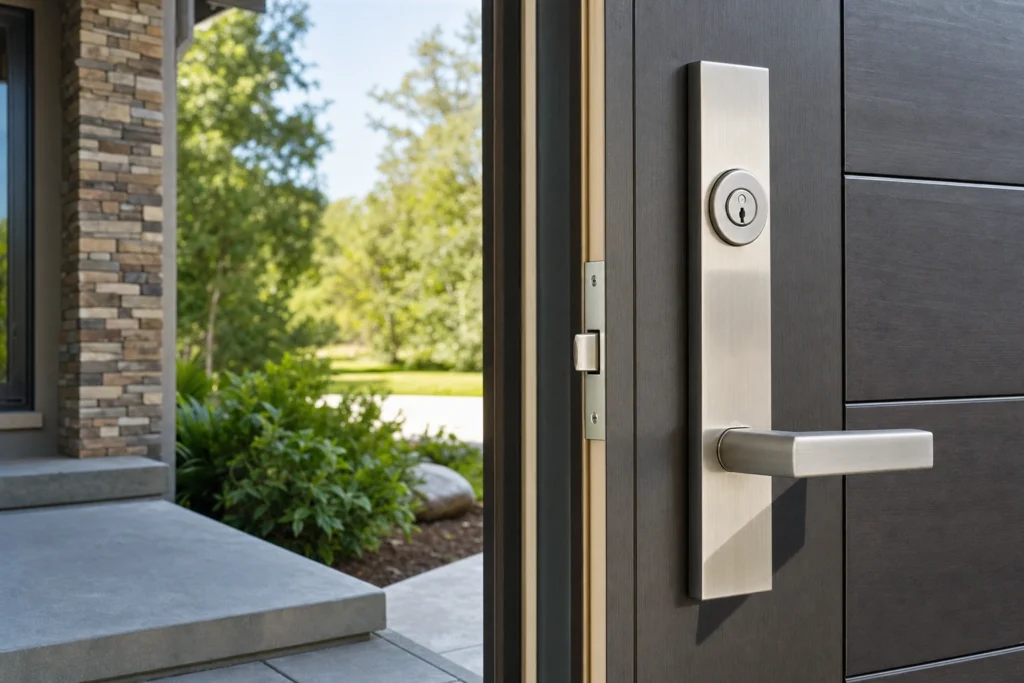
You are not hesitating because you cannot find a new lock. You are hesitating because you do not want surprises: door damage, hidden add‑ons, or a smart lock that drains batteries and quits when the app updates. Here is what is actually new this year, and how those changes address the most common objections to hiring professional lock installation.
What Changed in 2026 Hardware, and Why It Matters
The biggest shift in 2026 is not flashy features, it is tolerance. More residential deadbolts and keyless locks ship with reinforced strike kits, adjustable latches, and mounting plates that account for small door and frame variances. That means a properly planned install can achieve a tight, smooth throw without forcing you into new holes or a new slab.
On the connected side, many models now support local control and common standards, which reduces app lock‑in and keeps basic functions working even if the Wi‑Fi drops. Think of it as “smart when you want it, a dependable lock when you do not.” Installation now includes setting the bolt travel and strike engagement so the motor is not working against friction, which directly extends battery life.
Commercial customers are seeing similar gains. More grade‑rated hardware arrives as modular kits, so a contractor can match backset, door thickness, and handing on site without improvising. The result is cleaner alignment, stronger strike anchoring, and fewer return visits to tune sticky latches.
Your Top Objections, Answered by This Year’s Options
“I do not want new holes in a perfectly good door.” You have more retrofit‑friendly choices this year. Many keyed and keyless deadbolts are designed to reuse standard bore holes, with slimmer exterior profiles that cover old footprints. The reinforced strike and long screws now included in more kits shift the strength to the frame, not just the door edge, so you gain security without extra drilling.
“I do not trust connected locks to stay reliable.” Reliability comes from fit first, features second. A motor fighting a misaligned bolt is what drains batteries, not the smartphone feature set. With 2026 hardware, auto‑calibration and clearer setup steps make it easier to set a true neutral position. If you prefer to stay offline, you can still choose keypad or high‑security mechanical options that focus purely on sturdy throws and hardened strikes.
“I can do it in 20 minutes.” You probably can hang hardware quickly. The question is whether the bolt centers cleanly in the strike under real‑life conditions, like when weatherstripping compresses or the door swells. Newer locks are less forgiving of misalignment because they are tighter by design. A careful install checks hinge sag, strike depth, and latch positioning together. That extra hour saves you from keys that chew, codes that stick, or motors that grind.
If you are a homeowner weighing options, our Residential Locksmith page outlines common upgrade paths, from solid mechanical deadbolts to keypad entries that keep a spare key out of the flowerpot. Business managers can review door hardware choices, master key planning, and access control considerations on Commercial Locksmith.
Where Professional Installation Still Pays Off
Door and frame alignment changes with season and use. Small gaps grow, weatherstripping compresses, and hinges loosen. That is why a smooth turn on day one can turn into a sticky throw by month three. A professional install treats the door set as a system: hinges are tightened or shimmed as needed, strike boxes are deepened and reinforced, and latch positions are tuned so the bolt seats fully under light pressure. This protects both security and everyday usability.
For connected locks, setup is part of the install. Calibrating bolt travel, testing auto‑lock timing against your door’s closing speed, and confirming a firm key override all happen before anyone leaves. The punchline is simple. The latest lock installation trends in 2026 only deliver what they promise if the hardware is aligned, the strike is reinforced, and the door actually closes square.
If you are comparing quotes, ask what is included beyond hanging the hardware. The value shows up in the clean alignment, not just the box on the door. You can see the range of work we handle on our Services page.
What to Check Before You Buy This Year
Start with the door you have, then pick the lock that fits it. A quick checklist helps you filter choices and avoid returns.
-
With smart features or without: Do you want keys only, a keypad, or app control with a manual key override?
-
Security rating and reinforcement: Is the hardware grade appropriate, and does it include a strike box and long screws for the frame?
-
Door specifics: What is your door thickness, backset, and material, and does the lock match those specs without adapters?
-
Power and fallbacks: If the batteries die or the network is down, how do you get?
-
Ongoing management: For rentals or teams, how will you add or remove codes and keys without creating chaos?
Bringing these answers to a consultation speeds the process and narrows you to a short list that fits your door, your routine, and your budget. It also reduces the chance of overbuying features you will not use.
Ready for a Cleaner Install This Year?
If you want less friction and fewer surprises, align the door, reinforce the frame, then choose the lock. That order, more than any single feature, is what keeps you secure every time the door closes. If you would like help selecting hardware or scheduling professional installation, reach out through Contact Us.