
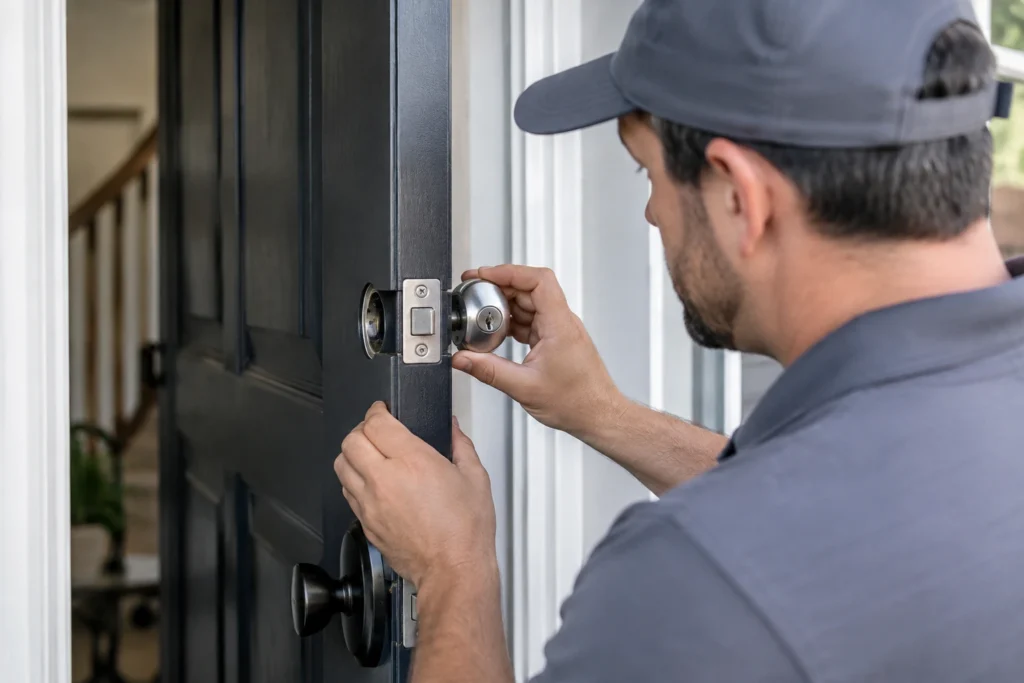
Atlanta homeowners have many choices, and the best residential locksmith for your home is the one who proves credibility up front, lays out transparent, line-item pricing, and gives straight guidance on whether to rekey or replace. This guide focuses on residential needs only, pairing a fast shortlist framework with a plain-English path for rekey versus replacement so you secure your doors without overpaying or risking scams. Because traffic and coverage vary across Atlanta neighborhoods, we also set expectations for neighborhood-based ETAs and how to handle emergencies versus scheduled work. Throughout, references to recognized industry scope, ethics, and verification cues help you separate true pros from questionable listings before anyone steps on your porch.
Shortlist the right residential specialist in minutes
Start by confirming you are talking to a residential-focused locksmith who will give you a written estimate and a realistic, neighborhood-based arrival window. Industry references such as NAICS 561622 and ONET 49-9094 describe locksmiths and safe repairers as professionals who install, repair, open, and rekey locks and related hardware, which helps you frame appropriate scope when you vet providers. For credibility, many consumers also look for involvement with recognized trade credentials; for example, ALOA’s IAIL certifications require recertification every three years and are respected within law enforcement, insurance, and security circles, and the ALOA Code of Ethics obligates members to uphold high moral principles and fair dealing.
Use this checklist to filter quickly and safely:
- Residential scope, clearly stated. Look for core services like rekeying, deadbolt installation, home lockouts, and door or strike alignment adjustments.
- Identification and insurance. Ask for the company name, the technician’s name, vehicle description, and proof of insurance. Request a photo ID shown on arrival.
- Transparent, written estimate. Have the service call, labor, parts, and any after-hours or mileage multipliers itemized before work starts.
- Non-destructive entry first. For lockouts, ask which bypass methods will be attempted before drilling and what condition the door will be left in.
- Neighborhood-based ETA. Ask for a specific window tied to your location and time of day, plus a text or call when the tech is en route.
- Scam filters. Be cautious of teaser prices too low to cover a skilled visit, cash-only demands, or starting-at ads with no defined scope.
If you want a fast screen for questionable listings, our companion guide on the first sign worth noticing before you request a quote explains how to spot vague scopes and bait pricing before you call. When you have a couple of real contenders, our compare the scope before you compare the price walkthrough helps you line up apples-to-apples proposals by matching cylinders, hardware grade, door prep, and warranty terms.
Helpful context while you browse: many Atlanta-area providers publicly describe themselves as family-owned, local businesses focused on community safety and clearly list residential, commercial, and automotive locksmith solutions. Several also publish areas served, for example a notation like Areas served: Alpharetta GA, and include direct phone and email on their rekey pages. Those visible, verifiable basics, together with scope that matches the trade definitions in NAICS 561622 and the ONET summary for locksmiths and safe repairers, are cues you can confirm in minutes before you request a quote. Some shops also note that their local closing calendar fills fast in certain seasons, which is a useful scheduling signal if you are planning a move-in or contractor turnover.
What residential locksmiths actually handle and how quotes are structured
A residential locksmith’s everyday scope includes rekeying cylinders and keying multiple doors alike, installing or replacing deadbolts and entry sets, resolving house lockouts with non-destructive methods when possible, diagnosing sticky latches or misaligned strikes, and installing or troubleshooting smart locks. This aligns with how NAICS categorizes the trade and how ONET details tasks for locksmiths and safe repairers, including adjusting door hardware and repairing or replacing lock components. On multi-door homes, a locksmith can consolidate keys to reduce what you carry and address door or frame issues that would otherwise sabotage smooth operation after a rekey.
Expect quotes to follow a predictable structure: a trip or service call, labor that is typically per cylinder for rekeying or per unit for installations, and parts for any new hardware. After-hours or urgent windows may carry higher rates. A good invoice separates labor from parts, shows taxes and fees, and states any warranty terms in plain language, including how to request follow-up service. If your home has SmartKey-style locks, note that these rekey differently than traditional pin tumbler cylinders and may influence cost or feasibility; sending a close-up photo of the keyway or a latch stamp that says SmartKey helps the shop quote accurately ahead of time.
Rekey or replace: a plain-English path for common situations
Use this rule of thumb: if your security needs have changed but the hardware is sound, rekey; if the lock is failing, damaged, or you want a grade or style upgrade, replace. Trade guidance on rekeying explains that it resets which keys work and avoids replacing good hardware, and both NAICS 561622 and ONET 49-9094 list rekeying along with lock installation and repair as core locksmith services. Qualify the rule in two ways. First, ask if any cylinders are master-pinned and request removal during rekey if you want full key control. Second, if key control is the main driver, ask about moving to a restricted or high-security keyway with controlled duplication as an alternative to full hardware replacement.
Rekey is the efficient choice for move-ins, contractor turnover, or a lost key when there is no sign of forced entry, and it is also how you combine multiple door keys into one. Keying alike requires compatible keyways, so send your locksmith the brand stamps from the latch plates or the key itself and ask them to confirm whether your cylinders share the same keyway family, often indicated by codes like KW1 or SC1. If brands or keyways are mixed, expect the tech to propose cylinder swaps or select new hardware to achieve one-key convenience, with associated parts and labor. If your home uses SmartKey-type cylinders, rekeying is done with a reset tool rather than traditional pinning, so ask the locksmith how that affects any master keying or keying-alike plan.
Replace when the lock is failing, drilled, corroded, or your current hardware is builder grade and you want a stronger rating or a different style. Converting to smart access or adding a high-security deadbolt is also a replacement moment. Do not assume replacement alone will cure a sticky door. Persistent sticking or binding is usually caused by door or strike misalignment, sagging hinges, or poor prep, so ask the technician to diagnose and correct hinge, shim, and strike alignment in addition to any hardware change. For a deeper look at how a rekey changes key control and how to plan it, see our walkthrough at Rekey services: a detailed breakdown.
Take a moment to consider life safety and egress before choosing deadbolt types. On dwelling exit doors that must allow quick egress, a double-cylinder deadbolt that requires a key from the inside can create a serious hazard in a fire or other emergency, and many authorities restrict or prohibit that configuration. Confirm what your local building authority and HOA allow, and consider alternatives such as a one-sided deadbolt, reinforced glass, or security film where appropriate to balance security with safe exit. Because licensing and permitting rules for locksmiths vary by jurisdiction, verify any local requirements and always request proper identification on arrival. As one point of reference for how some states regulate the trade, the Maryland Department of Labor publishes a consumer portal for locksmith licensing and verification; use your state or city’s equivalent resources if they exist.
Smart lock fit check before you buy
Before you pick a smart lock, have a locksmith or knowledgeable installer verify the door details that govern compatibility. Handing, backset, and bore sizes determine whether a given model will fit, and door material and thickness can influence the installation approach. Some mortise or multipoint setups call for specific models or adapter plates, and narrow stiles on certain metal doors can constrain your options. Sharing clear photos of each door edge, latch plate, and interior face ahead of time lets the shop confirm fit, bring the right parts, and plan any door prep.
Decide on the access experience you want first, then choose hardware that supports it. Whether you prefer simple code-only access, Bluetooth convenience, or integration with your existing home platform, ask the locksmith to confirm which models are reliable for your door and how updates and user code management will work day to day. ONET’s locksmith profile notes that locksmiths install, repair, and adjust locks and related hardware, which is why a professional fit check is valuable when you are mixing electronic components with existing doors. If any door is out of alignment or if existing holes do not match the template, professional installation helps the new lock throw smoothly and maintain security. If your home already uses SmartKey-style locks on other doors, share that during planning because it may affect keying-alike options across the property.
Arrival windows, emergencies, and safety while you wait
In Atlanta, traffic patterns and coverage zones differ by neighborhood and time of day, so ask dispatch to give a realistic window for your specific area plus an on-the-way text or call. Share how to reach you if you cannot pick up a phone call, and request text updates from the start if that is easier. Reputable providers also make their paperwork match their promises: itemized estimates before work, IDs on arrival, and invoices that clearly separate service call, labor, and parts. These transparency norms align with professional ethics that emphasize fair dealing and clear communication, reflected in ALOA’s IAIL standards and Code of Ethics.
For related details, review A Better Question to Ask Before You Approve the Work and How Much Does a Local Locksmith Charge in Georgia? Real Ranges, After‑Hours Fees, and What’s.
Emergency work prioritizes availability and speed, while scheduled work allows efficient planning. For emergencies, be ready to show basic proof of residency or authorization before entry. For scheduled visits, send photos, confirm brands and finishes, and pre-approve parts so the tech arrives prepared. Either way, ask about after-hours or rush fees in advance and have those terms written into the estimate so there are no surprises when you settle the bill. If anything feels unclear at any point, pause the job and request the step-by-step plan in writing before proceeding; professionals will respect that request.