
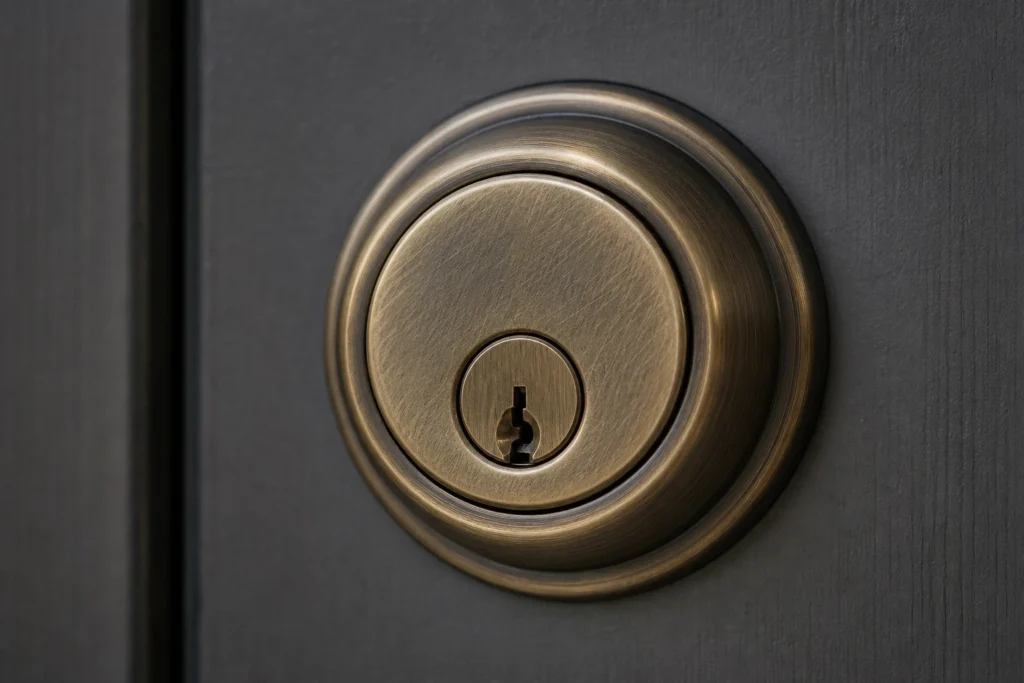
Locked doors plus bad advice is a costly mix. The fastest way back inside is to ignore the internet’s quick fixes and follow a practical, myth-busting plan that fits how residential hardware actually works in 2026.
The Biggest Myth: There’s Always a Quick Trick
Sliding a card, bending a hairpin, or “just turning the latch with a butter knife” sounds clever until you meet a modern deadlatch and a reinforced strike plate. Those parts are designed to stop exactly that move, and forcing them can bend the latch, misalign the door, and leave you paying for a repair on top of the unlock.
Another common belief is that pulling hinge pins lets you lift the door out. Many exterior doors use security hinges with non-removable pins, set screws, or interlocking tabs. Even on older hinges, weatherstripping, paint, and the door’s rabbet hold the slab in place. You usually end up with a damaged hinge and the door still stuck.
What Actually Works, Safely and Legally
Before you try anything risky, slow down and run a short, proven sequence. Here is how to handle a house lockout emergency without making it worse:
- Check every entry: Confirm whether a garage-to-house door or side door is truly locked and latched.
- Look for a spare that is not “hidden”: A key with a trusted neighbor or a lockbox you control is safe. Avoid planter and doormat stashes.
- Verify the lock’s condition: If the knob turns but the latch will not retract, the issue might be alignment, not the key. Light pressure on the door while turning can tell you if it is a jam or a true lockout.
- Pause on DIY force: Tools that pry, wedge, or fish can bend frames and scratch finishes. Window “break to enter” plans are almost always more expensive than a professional unlock.
- Call qualified help: If you need house lockout services, choose a provider that prioritizes non-destructive entry and can clearly explain next steps.
If you want a full overview of options beyond an emergency unlock, review our residential locksmith services. For a broader look at what we handle, our services page outlines residential, commercial, and automotive support.
Smart Locks Create New Assumptions
A frequent misconception in 2026 is that a phone app guarantees entry. Smart locks still depend on batteries, permissions, and connectivity. If the lock’s battery is flat, Bluetooth is off, or your account needs two-factor authentication that you cannot complete from the porch, the “digital spare” will not help.
If your keypad lock supports emergency power pads or temporary offline codes, those features are model-specific. Check the manufacturer’s instructions before you need them, and keep fresh batteries available. If the lock is unresponsive or you are not sure which feature applies, forcing the door will not revive the electronics. A professional can attempt non-destructive methods first, then address the lock’s power or programming after entry.
Drilling Is Not the Default
Another myth says a locksmith will arrive and drill immediately. On a typical residential call, a pro attempts the least invasive option first, such as picking, decoding, or bypassing a misaligned latch. Drilling is a last resort for damaged, high-security, or failed hardware and is usually followed by replacing or rekeying the cylinder. That approach protects the door and keeps costs focused on the actual problem, not on avoidable repairs.
Expect identity verification. A reputable technician should confirm you have the legal right to enter. Having photo ID and a way to show residency, such as a piece of mail, speeds things up. If your wallet is a neighbor or building representative who can vouch for you often helps.
“Break a Small Window, It’s Cheaper” Is Usually Wrong
Tempered glass in sidelights and many windows is expensive to replace, and cleanup adds time and risk. A broken pane also leaves the home unsecured until it is repaired. What feels immediate in the moment often turns into a second service call and a larger bill than a standard unlock. Unless there is an urgent safety issue inside the home, avoid breaking glass as a strategy.
Prevent the Next Lockout Without Overkill
You do not need a full hardware overhaul to make repeat lockouts unlikely. A small lockbox mounted in a discreet spot, controlled by you and a trusted person, is simple and effective. Rekeying to a single key for all exterior doors reduces key juggling. If you already run a smart lock, set one reliable backup method, such as a code that does not rely on your phone’s battery or a temporary guest code for someone you trust.
If an entry sticks, address the alignment before it turns into a lockout. A door that drags or a bolt that will not throw smoothly often signals a strike plate or weather change issue, not a failing lock. Small adjustments can extend hardware life and keep that door opening cleanly.
If you are locked out now, reach out through Contact Us and our team will guide you through next steps. If you are planning ahead, explore our residential locksmith services to see options that reduce stress the next time the door clicks shut behind you.