
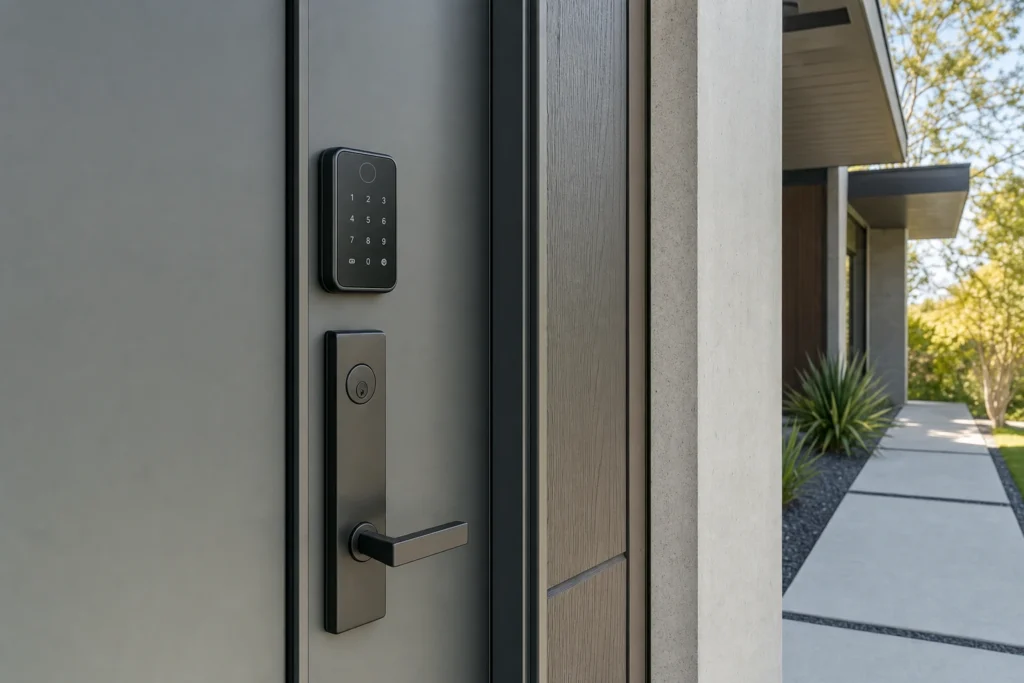
A smart lock is only as good as the way it fits your door and your routine. In 2026, most buyers end up choosing between two clear paths: a retrofit add-on that keeps your existing deadbolt, or a full smart deadbolt replacement. The right choice depends on how your door is built, who needs access, and how you plan to manage it over time.
Retrofit Add-On vs Full Smart Deadbolt: What Changes on Your Door?
A retrofit add-on mounts on the inside of your door and turns the thumbturn of your current deadbolt. Your exterior hardware stays the same, so curb appeal and door finish are unchanged. This route is appealing if your deadbolt is sturdy, the door and frame are in good shape, and you want minimal disruption during setup.
A full smart deadbolt replaces the entire lock. You remove the old deadbolt and install the new one through the existing boreholes. Many homeowners like this route because everything is fresh, including the internal cylinder and strike engagement. A new smart deadbolt can go in with a screwdriver, but the details still matter. A misaligned strike plate can make the bolt feel sticky, and a Wi‑Fi setup glitch can leave you troubleshooting when you would rather be.
If you are weighing smart locks for a home, review any past issues like a sticky latch, a door that swells, or a frame with short screws in the strike. For offices or storefronts, consider door traffic and staff turnover. Those practical details often tip the decision more than any spec line.
Control, Reliability, and Ongoing Upkeep
Retrofit units tend to be quick to install and easy to roll back if you change your mind. Because the exterior side of the door stays familiar, guests and staff interact with the door the same way they always have, which can reduce training and signage. The tradeoff is that you are building on top of existing hardware, so any weakness in the current deadbolt or door frame remains.
A full smart deadbolt replacement resets the hardware baseline. You can address cylinder slop, set the latch back to the proper depth, and improve strike engagement. That is useful if your current lock has a loose cylinder or the bolt never throws cleanly. The tradeoff is that you must get the fit right. A deadbolt installed a couple of millimeters off center can start chewing up keys or bind the motor over time.
Both paths benefit from simple habits: keep firmware current, replace batteries on a schedule, and test the bolt throw with the door open and closed. If you have struggled with connectivity before, plan for where your router sits and how the signal reaches the door. Little decisions, like moving a metal planter that blocks a signal or swapping short strike screws for longer ones, have an outsized impact on daily reliability.
Security and Access Policies: Homes vs Workplaces
At home, the decision often turns on convenience and backup options. If you prefer the look of your existing exterior hardware and want a light-touch upgrade, retrofit is compelling. If you are ready to refresh aging hardware and tighten the fit of the door, a full replacement helps close several small gaps at once.
At work, policy drives the choice. If you regularly add and remove access for staff or vendors, keypad-based models and managed access through an app can reduce key handoffs. Some systems support temporary or scheduled codes, while others focus on app control. A contractor should verify exactly which features your chosen model supports, and how they align with your HR or facilities procedures. If you want help aligning hardware choices with your building’s needs, review our Commercial Locksmith page to see how access control fits into broader door security.
Homeowners planning a broader refresh that includes rekeying or new hardware should also consider how a smart deadbolt pairs with door reinforcement and cylinder condition. You can see the bigger picture on our Residential Locksmith page.
How to Choose in 2026
-
Identify the real problem: aging hardware, access sharing, or both.
-
Inspect the door and frame: look for a spongy bolt feel, loose cylinders, or a misaligned strike.
-
Map access needs: who needs how often that changes, and which backup you prefer.
If you are comparing 2026 smart lock installation services, your total cost and timeline will largely depend on that inspection. A solid door with clean boreholes is a strong candidate for a full replacement. A newer door you already like may be better served by a retrofit that adds control without changing the exterior look.
Installation Risks You Might Not See
Most problems do not start with the electronics, they start with the door. A bolt that does not extend a full inch into the frame or a strike held by short screws undermines security no matter how smart the lock is. Small misalignments force the motor to fight friction, which shortens battery life and increases failure risk at the worst moments. Connectivity quirks also show up in the real world. A router tucked behind a metal cabinet or an outdoor camera sharing bandwidth can interrupt setup or delay remote commands.
If you would like help evaluating your door, choosing between retrofit and full replacement, and fitting the hardware correctly, explore our Services to see how smart locks fit within broader door security.
Next Steps for Your Property
If you are seeking smart locks locksmith services in 2026, start with the comparison above. Decide whether you want to build on a solid deadbolt or replace it entirely, then match that choice to your access needs. If you want a second opinion before you buy, contact Lion Guard Locksmith through our Contact Us page and we will help you plan a clear, reliable path forward.