
A dead fob, a missing blade, or a key that will not talk to your car’s security system can stop your day cold. Most 2026 vehicles will not crank until a programmed key tells the immobilizer “yes,” which is why the order of your next steps matters more than any single tool. Use this walkthrough to move from problem to working key with the least delay.
Get Clear on Your Key System
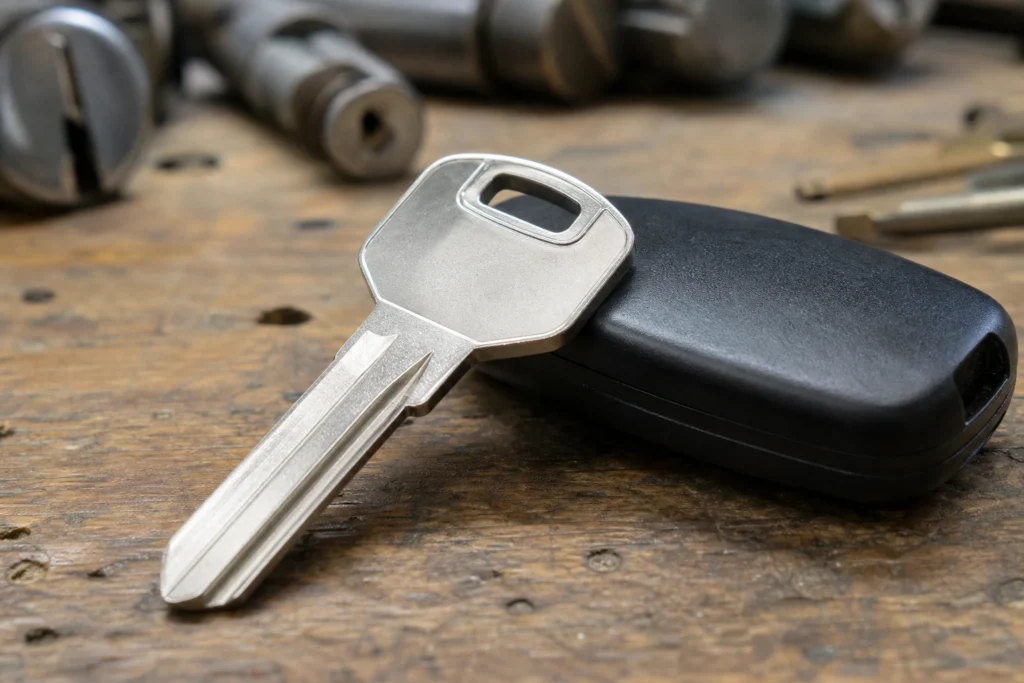
Before you call anyone, identify what you have. A plain metal key with no buttons usually fits older models and needs only an accurate cut. A thick‑headed key without a separate fob likely hides a transponder chip that must be programmed after cutting. A remote‑head key puts buttons on the head with a chip. A proximity fob works with a start button and may include a hidden emergency blade.
You can confirm clues quickly. If your car has a start button, you almost certainly use a proximity fob. If a key turns the cylinder but the engine will not start and a padlock icon flashes on the dash, you may have a transponder key that is not recognized. Check the owner’s manual for key types and whether your model supports on‑board programming with an existing working key. If even one working key remains, you are on the faster duplicate path; if not, expect added security steps.
A Step‑by‑Step Guide to Car Key Replacement
- Identify the situation: duplicate from a working key or all keys lost.
- Gather proof: registration or title, photo ID, and the vehicle’s VIN from the windshield or door jamb.
- Note details: year, make, model, trim, and any push‑to‑start or remote start features.
- Choose your provider: dealership or mobile car key replacement locksmith services that come to you.
- Authorize service: a contractor should verify ownership before cutting or programming.
- Cut and program: the new blade is cut to code, then the chip or fob is paired to your immobilizer.
- Test everything: door functions, trunk, panic, remote start if equipped, and a full engine start.
Each step has a purpose. Proof and VIN let a professional pull the correct key code and confirm compatible part numbers. The choice of provider sets expectations on timing. A dealership may need you to tow the car in and wait for parts. Mobile specialists often stock common keys, which can shorten the timeline. Proper testing at the end avoids repeat trips for a button or feature that was missed.
Hypothetical Walkthrough: Push‑to‑Start Sedan, No Spare
Say you misplace the only fob to a 2018 push‑to‑start sedan. You have registration and ID in hand, and the car is parked safely. A mobile technician arrives, confirms ownership, and checks the exact part number range your model accepts. They cut the emergency blade from a code tied to your VIN so you can unlock the door without damage. With a stable battery charger connected, they enter programming mode with a professional tool, add a new proximity fob to your vehicle’s security system, and test lock, unlock, trunk, and a full start with the brake pedal down.
If the original fob is gone for good, they can remove it from the car’s memory so it no longer starts the vehicle. Before leaving, they make a second fob while the system is already open, which is usually faster than starting from scratch later. The net result is one primary fob, one spare, and an emergency blade that lives in your wallet.
Small Choices That Save Time and Money
Keep the car accessible. Programming often requires opening and closing doors and cycling the ignition sequence. A healthy battery shortens programming time and prevents false failures; if the car has been sitting, consider a brief charge. Clear Bluetooth devices, other fobs, or metal bundles away from the cabin during programming to reduce interference.
Do not pry a door or fish a handle. Modern linkages and deadlock modes can leave you with bent frames or an airbag bill. If you are locked out, it is faster and cheaper to call a professional than to repair damage after a DIY attempt. Once you have a replacement, label the emergency blade, store a spare fob in a safe place at home, and set a reminder to replace fob batteries every year. These small steps turn a crisis into a one‑time inconvenience.
Where Professional Help Fits In
If you want hands‑on help or you are unsure which key system you have, review our automotive locksmith services on the automotive locksmith services page. For a broader view of what we offer beyond vehicles, see the full list of locksmith services. Ready to schedule or have a quick question? Contact us and ask about automotive car key replacement solutions that fit your vehicle and your timeline.
A lost key is a solvable problem. Start with identification, line up proof and VIN, and let a qualified pro handle the cutting and programming so you can get back on the road with a tested spare in 2026.