
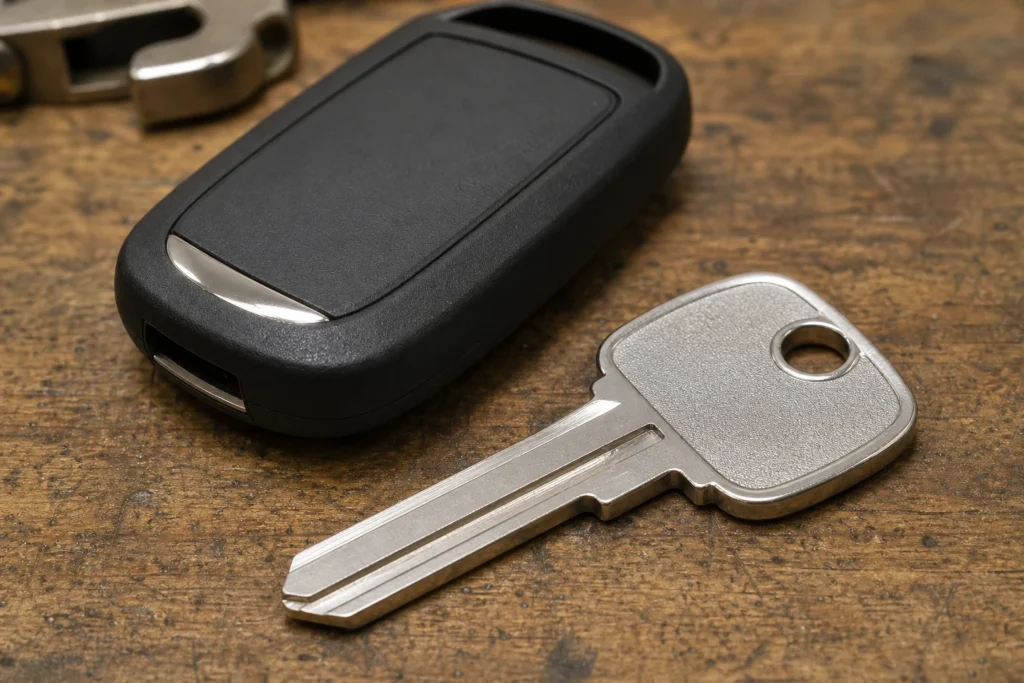
A key that turns but leaves the dash dark, a start button that blinks, or a steering wheel that will not budge are not random. They are evidence. Before you spend money on ignition repair services, use the next ten minutes to gather proof. The results will either fix the issue outright or point you to the exact part of the system that needs professional attention.
What Has to Be “True” Before Any Car Starts
Push-to-start cars check for a few green lights in seconds: the brake pedal switch must report “pressed,” the fob must authenticate, the transmission must read Park or Neutral, the steering lock needs to release, and the body and engine modules have to agree over the network. A “no” on any piece halts the whole chain.
Traditional key cylinders add a mechanical layer. The key blade must lift tiny wafers into alignment so the cylinder can rotate and move the electrical switch. The immobilizer still has a say, because the transponder chip in the key has to be recognized. Knowing these checkpoints helps you read symptoms as proof, not guesses.
Ten-Minute Evidence Walkthrough
- Check interior lights with the door open. Bright and steady usually rules out a dead battery. If lights sink or flicker, charge or jump the battery before anything else.
- Watch the cluster. If the dash stays black while interior lights are bright, you likely have an ignition switch, key recognition, or module wake-up issue rather than a weak battery.
- Try a different key or fob. A worn metal key or a dying fob battery can fail authentication. If the spare works, the problem is with the key or fob, not the car.
- For push-to-start, verify brake lights. No brake lights when you press the pedal points to a failed brake switch or fuse, which blocks crank requests.
- Move the shifter to Neutral and attempt a start. If it cranks in Neutral but not in Park, the transmission range switch needs attention.
- Relieve steering bind on a keyed column. Gently rock the steering wheel left and right while turning the key. Parking with the wheels turned can load the lock pawl.
- Listen for a click. A single click under the dash or hood when you try to start suggests the request is reaching a relay. Silence with a live dash hints at the ignition switch, shifter input, or brake switch.
- Watch the security indicator. A fast-blinking key icon or “Key not recognized” points to immobilizer or fob placement. Many cars have a backup spot for a weak fob; check the owner’s manual for the exact location.
What Your Results Actually Prove
If the interior lights dim hard but the dash comes on briefly, the battery is your primary suspect. Fixing that first prevents false ignition errors and protects sensitive modules. If the dash stays dark while cabin lights shine, you just gathered strong evidence that the ignition switch is not sending “ACC/ON,” or that the car is not recognizing the key at all.
A successful crank only in Neutral puts the spotlight on the Park/Neutral safety switch. That is useful because it separates a starter or battery problem from a control input problem. No brake lights on a push-to-start car is also proof. The car will not allow a crank request if it does not see the brake pressed, and replacing the switch or its fuse often resolves the no-crank without touching the ignition cylinder.
If your key will not turn and the wheel feels jammed, steering load is common after parking against a curb. Gentle wheel movement while turning the key is safe. Grinding the key or hammering the cylinder is not. If a spare key works cleanly while the daily key struggles, you have proven mechanical wear on the blade or wafers. That points to cutting a key to code or servicing the cylinder, not replacing starters or batteries.
A blinking security light or “Key not recognized” message tells you the immobilizer is blocking fuel or spark even if the engine cranks. Placing the fob in the manual’s backup reader spot or using a properly programmed key separates a programming issue from a hardware fault.
Safe DIY Moves vs. Red Flags You can handle a few items without risk: replace a weak fob battery, test a spare key, clean a grimy key blade, check the brake-light fuse, and try the Neutral-start test. A tiny puff of lock-safe dry lubricant made for ignition cylinders can free sticky wafers, but avoid flooding the cylinder with oil-based sprays that attract grit.
Stop and call for help if a key is bending, the wheel refuses to move after gentle pressure, the cylinder feels gritty or seized, or the dash stays black despite a healthy battery. Steering columns hide airbags, shear bolts, and delicate reader coils that are easy to damage without the right tools.
When Professional Help Makes Sense
If your ten-minute walkthrough points to a worn key or cylinder, a failed brake or range switch, or an immobilizer fault, an automotive locksmith can resolve it on site in many cases. To see everything Lion Guard Locksmith handles for vehicles, visit our Auto Locksmith page. You can also review all available options on our Services page, or reach out through Contact Us for fast support.
Use this ignition repair tips and walkthrough any time the car refuses to start. The evidence you collect now narrows the problem, saves parts from guesswork, and speeds up any professional visit. If your results point to a stuck cylinder or a no-recognition immobilizer, contact us and we will guide you through the next step in 2026 terms, not guesswork.