
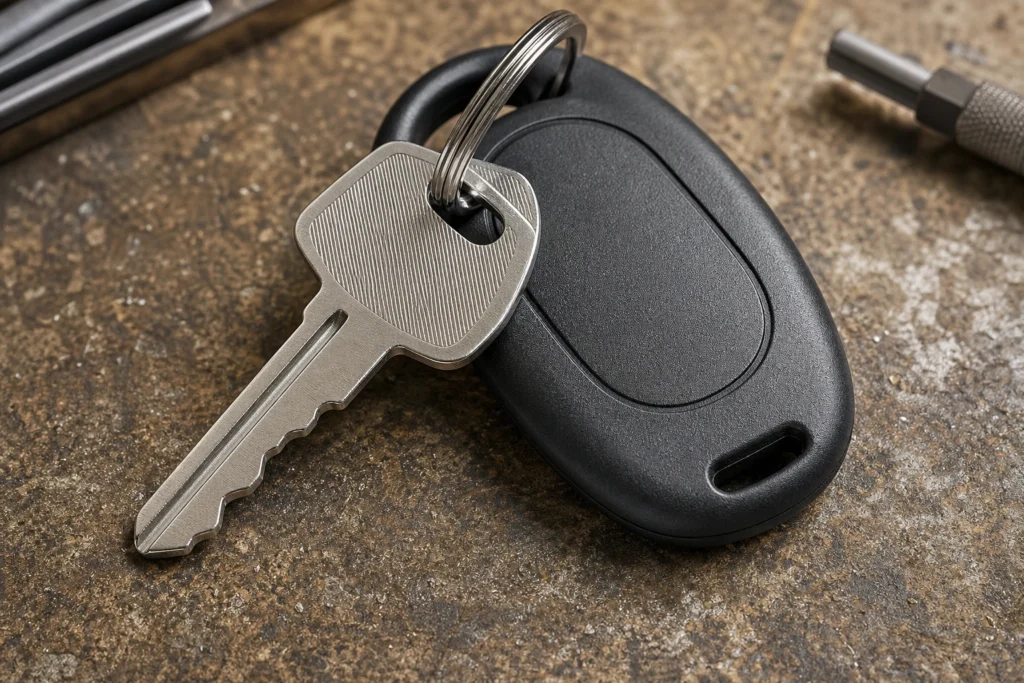
You can narrow the price and timing of a replacement key in minutes if you know two things: the key type in your vehicle and whether at least one working key still exists. That single bit of clarity decides if you are driving again the same day or waiting for a part to arrive, and it is the biggest factor in how much you spend in 2026.
This guide walks you through the real cost drivers, typical timelines, and the choices you have so you can pick a path that fits your schedule and budget.
Know Your Key Type and Why It Changes the Bill
A plain metal key with no chip is mostly about accurate cutting. That is the simplest job and usually the fastest. Many older vehicles use this style, and a code cut can often be done without removing any hardware.
Transponder keys add a small chip that must be paired to the vehicle’s immobilizer. Cutting is only half the job. Programming tools need to talk to the car’s body electronics, and some models require extra verification steps when no working key is present.
Remote head keys combine a transponder with lock/unlock buttons. Proximity or “smart” keys go further and allow push‑to‑start and keyless entry. These fobs often need model‑specific parts and more involved programming, which can add both time and cost, especially if you have zero working keys on hand.
If you are unsure what you have, a quick photo of the key or fob, plus your VIN, helps an automotive specialist identify the right path. You can start that process on our page for automotive locksmith services.
What Actually Drives the Price
Parts are the foundation. A basic metal blade is inexpensive compared to an encrypted transponder or an OEM proximity fob. Aftermarket options may lower parts cost on some models, while others need original parts to program correctly.
Labor is the second lever. Cutting a key from code is faster than hand decoding a worn lock. Programming time ranges from a quick add‑a‑key procedure to a full immobilizer reset when no keys remain. Travel distance and after‑hours service can also influence the total. You can control a few of these variables by having your VIN and proof of ownership ready, confirming the exact key type, and asking whether an in‑stock aftermarket fob is appropriate for your vehicle.
Timelines You Can Plan Around in 2026
Metal keys are typically cut quickly once the code is known, often in the time it takes to verify ownership and set up a machine. Expect a short visit if no programming is involved.
Transponder and remote head keys usually add a programming window. When a working key is available, many vehicles support a faster “add key” process. Starting from zero keys may require additional security access, so budget extra time for the verification step and the program cycle.
Proximity fobs can be same‑day if the correct part is in stock. If a model‑specific fob needs to be sourced, the timeline extends to the arrival of that part. Some makes also require a longer immobilizer handshake for an all‑keys‑lost situation, which lengthens the appointment but prevents repeat downtime later.
Dealerships tend to schedule by appointment and may need to order parts tied to your VIN. A mobile automotive locksmith can often cut and program on site the same day, which avoids towing and shrinks the downtime window.
How to Compare Car Key Replacement Services Without Overpaying
Your goal is a key that works every time, at a fair price, without added delays. Start by comparing apples to apples: part type, programming method, and the total out‑the‑door number. Ask whether the quote includes cutting, programming, trip fee, and any immobilizer or module sync that might be required for your model year.
To get a fast, accurate quote and keep costs predictable, use this sequence:
- Identify the key type. A photo of the head or fob plus the vehicle’s year, make, and model helps pinpoint the part.
- Gather your VIN and proof of ownership. Having both ready speeds up legitimate programming on all‑keys‑lost calls.
- Ask about part options. For some cars, an aftermarket fob is appropriate and can be more affordable than OEM.
- Confirm the programming path. Clarify whether it is an add‑a‑key or an all‑keys‑lost procedure, and if any modules need reset.
- Request an out‑the‑door total. Make sure it includes cutting, programming, trip, and after‑hours charges if applicable.
If you want to see everything we handle in one place, review the full list on our Services page, then compare that scope to any dealership estimate you receive.
A Hypothetical Scenario: Budget and Timeline Tradeoffs
It is 7:15 p.m., your only smart key is missing, and you need the car for the morning commute. Option one is a dealership appointment. You may need a tow if the vehicle will not start, and the correct VIN‑matched fob might be a next‑day part. The upside is original branding on the fob. The tradeoff is schedule and potential towing costs.
Option two is a mobile automotive locksmith. If the correct fob is in stock, the visit can happen that evening or early morning on site. Programming may take longer when no keys remain, but it avoids towing and often fits the overnight window. If an aftermarket fob is appropriate for your model, that can reduce the parts line without sacrificing function. This is a common path for people searching for Affordable Car Key Replacement Options in Your Area that do not add extra days to the plan.
Next Steps for a Faster Return to the Road
If you are ready to move now, have your VIN, a photo of your key or fob if available, and proof of ownership at hand. Share those details with a specialist through our page for automotive locksmith services to get a same‑day plan, or reach out on our Contact Us page and we will help you choose the fastest, most reliable option for your vehicle.